


Ears pinned flat
The ears lie tight and flat against the neck. Usually a clear warning, but it can also belong with pain.
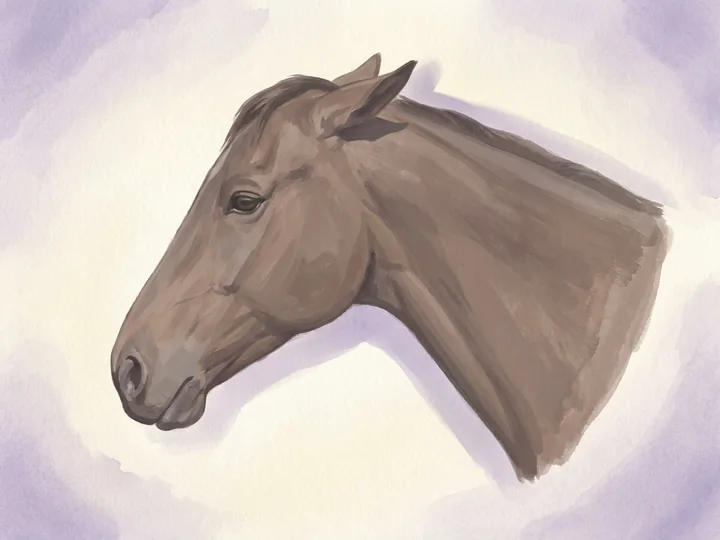
What you see
Both ears lie tight and motionless flat back against the neck, often together with a tense face.
What it can mean
- A threat or warning, for example toward another horse at feeding time.
- Strong aversion, or defending space or food.
- Pain or discomfort: flat, stiff ears are also one of the features of the validated pain scales.
What this does not prove
Pinned ears do not prove a horse is naturally grumpy or mean. They are a moment-to-moment signal and can just as well be a response to pain, fear or a specific situation.
Read the combination and the context
See whether there is a threat directed at something or someone (usually with the head turned, teeth bared or a lifted hind leg), or whether the flat ears belong with a tense pain face and no clear target.
When to seek help
If a horse that does not usually do this suddenly pins its ears often, especially when touched, saddled or ridden, have a vet rule out pain.
Discover more
Sources: McDonnell, S. (2003), University of Pennsylvania School of Veterinary Medicine (New Bolton Center) · Dalla Costa, E. et al. (2014), PLOS ONE · Gleerup, K. et al. (2015), Veterinary Anaesthesia and Analgesia.