


Head raised high
The head goes up and the neck straightens. Often alertness or tension, sometimes just looking into the distance.
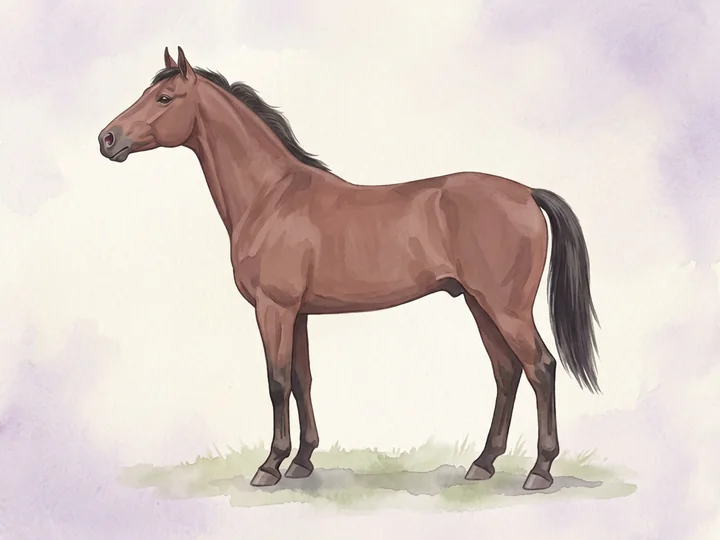
What you see
The horse raises its head, stretches its neck and often fixes gaze and ears on something far off. The back and body are usually more tense as well.
What it can mean
- Alertness: the horse has seen or heard something and is judging whether it is dangerous.
- Excitement or anticipation, for example as herd mates leave.
- Under saddle, a high head can belong with tension, imbalance, discomfort or over-strong aids.
What this does not prove
A high head does not prove fear by itself; it can equally be curious looking. And it is no proof of disobedience; it can be a response to imbalance, discomfort or pain.
Read the combination and the context
Note the nostrils, the tension in the body and whether the horse blows or snorts. See whether the trigger is outside (something in the distance) or in the work (saddle, bit, the rider's balance).
When to seek help
If a horse under saddle keeps carrying its head high with a hollow back when it did not used to, have the saddle, bit, back and teeth checked.
Discover more
Sources: McGreevy, P. (2012), Saunders/Elsevier · Dyson, S. (2022), Equine Veterinary Education (BEVA).