


Head lowered
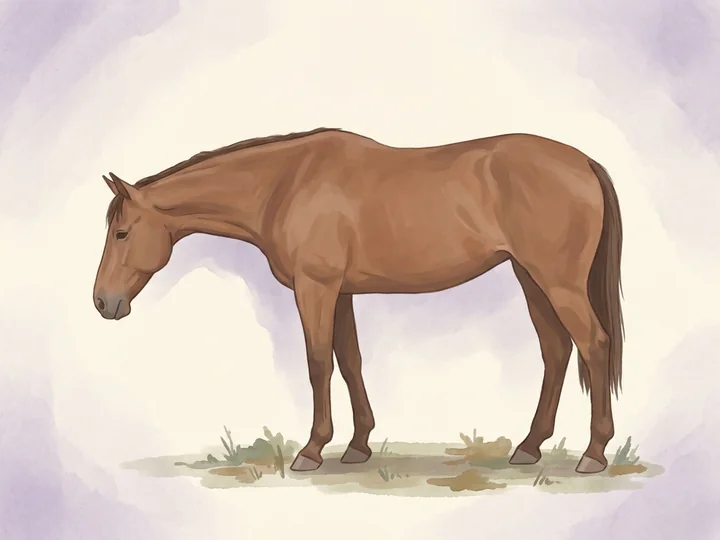
The head drops to around or below wither height. Often relaxation or dozing, but sometimes dullness or being unwell.
What you see
The horse lowers its head to around or below wither height with a loose neck. The lower lip may hang and the eyes may be half closed.
What it can mean
- Relaxation and rest, or light dozing in slow-wave sleep while the horse stays standing.
- Grazing or searching for food on the ground, a natural low posture.
- In work, a low, loose head can belong with relaxation and swinging through the back.
- A low head with a dull, withdrawn face can also mean dullness, exhaustion or illness.
What this does not prove
A low head does not prove contentment. The posture only gains meaning together with the face, the response to the surroundings and the situation.
Read the combination and the context
Compare a soft, loose low head on an alert but calm horse with a low head on a horse that is dull, not eating and unresponsive. Look at appetite, droppings, breathing and interest in the surroundings.
When to seek help
A horse that suddenly stands apart often with a low head, not eating and barely responding, should be seen by a vet the same day.
Discover more
Sources: McDonnell, S. (2003), University of Pennsylvania School of Veterinary Medicine (New Bolton Center) · University of California, Davis, School of Veterinary Medicine · World Horse Welfare.