


Pain signals
Horses naturally hide pain. Validated scales exist for the face and for ridden behaviour, but behaviour alone does not diagnose.
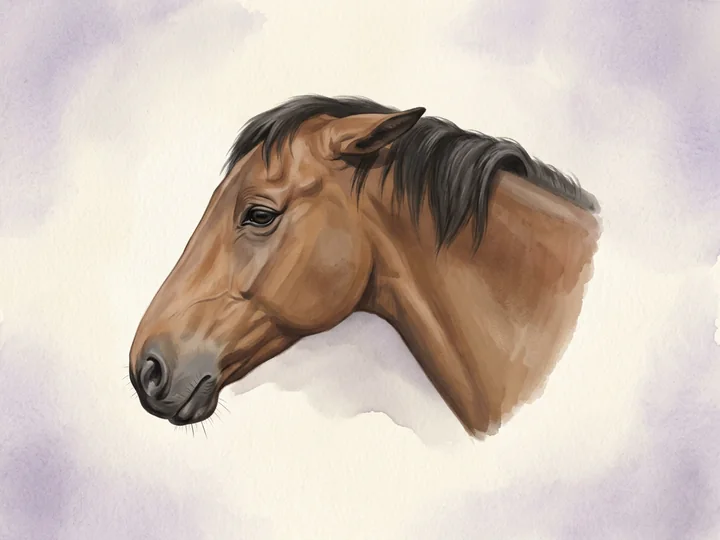
What you see
Possible pain signals include a tense pain face (low, stiffly held ears, a tight eye area, a tense muzzle and mouth), a changed posture, eating less, stiffness, and under saddle behaviour such as tail swishing, pinned ears, teeth grinding and going against the aids.
What it can mean
- Validated tools exist, such as the Horse Grimace Scale and the equine pain face description for the face.
- For ridden behaviour there is the ridden horse pain ethogram of 24 behaviours, where 8 or more strongly points to pain.
- Because horses are prey animals, they often hide pain, especially when someone is present.
What this does not prove
These signals are indications, not a diagnosis. Behaviour alone does not prove a specific problem, and the absence of clear signals does not rule pain out. Only a vet can establish pain and its cause.
Read the combination and the context
Watch above all for change from what is normal for this horse, and for several signals together. A new short fuse, eating less, stiffness or a change in behaviour under saddle weighs more than a single sign.
When to seek help
New or clear pain signals, or an unexplained change in behaviour, should be assessed by a vet. This section helps you observe and seek help in time; it is no substitute for veterinary examination.
Discover more
Sources: Dyson, S. (2022), Equine Veterinary Education (BEVA) · American Association of Equine Practitioners (AAEP) · Dalla Costa, E. et al. (2014), PLOS ONE · Gleerup, K. et al. (2015), Veterinary Anaesthesia and Analgesia · World Horse Welfare.