


Tail swishing
The tail lashes sharply or repeatedly. It can be flies, but also irritation, tension or pain.
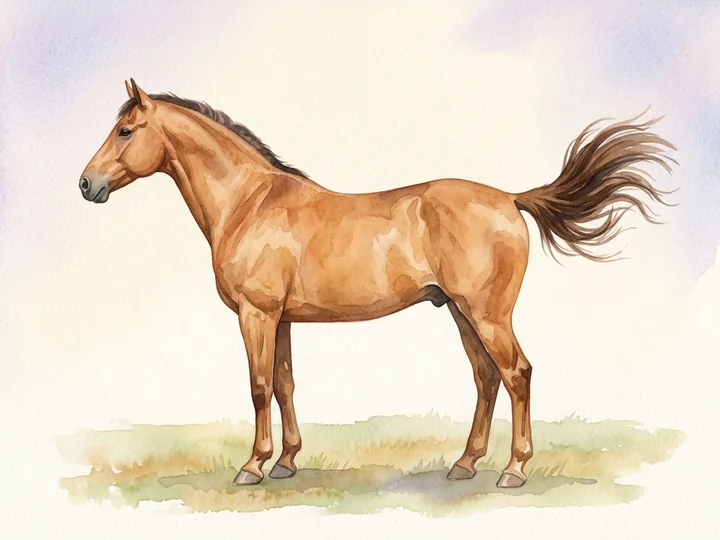
What you see
The tail moves forcefully, sharply or repeatedly from side to side or up and down, more strongly than the gentle chasing of flies.
What it can mean
- Chasing flies or relieving itch, especially in the warm season.
- Irritation or impatience, for example with repeated aids or touch.
- Tension or pain: a lot of hard tail swishing is one of the ridden horse pain ethogram behaviours.
What this does not prove
Tail swishing does not prove unwillingness or stubbornness. Under saddle especially, persistent swishing is often a sign of discomfort, tension or pain, not of resistance.
Read the combination and the context
Check whether there are flies. Under saddle, note the combination with ears, mouth tension, visible eye white and the quality of the gait. Several pain behaviours together weigh heavily.
When to seek help
Persistent or violent tail swishing without flies, especially together with other pain behaviours while ridden, should be investigated by a vet.
Discover more
Sources: Dyson, S. (2022), Equine Veterinary Education (BEVA) · American Association of Equine Practitioners (AAEP) · McGreevy, P. (2012), Saunders/Elsevier.