


Horse coat colours
Horses come in far more colours than just brown, black and white. Learn how to recognise coat colours, how they differ and how they arise. Each colour starts with what you see, then explains the genetics.
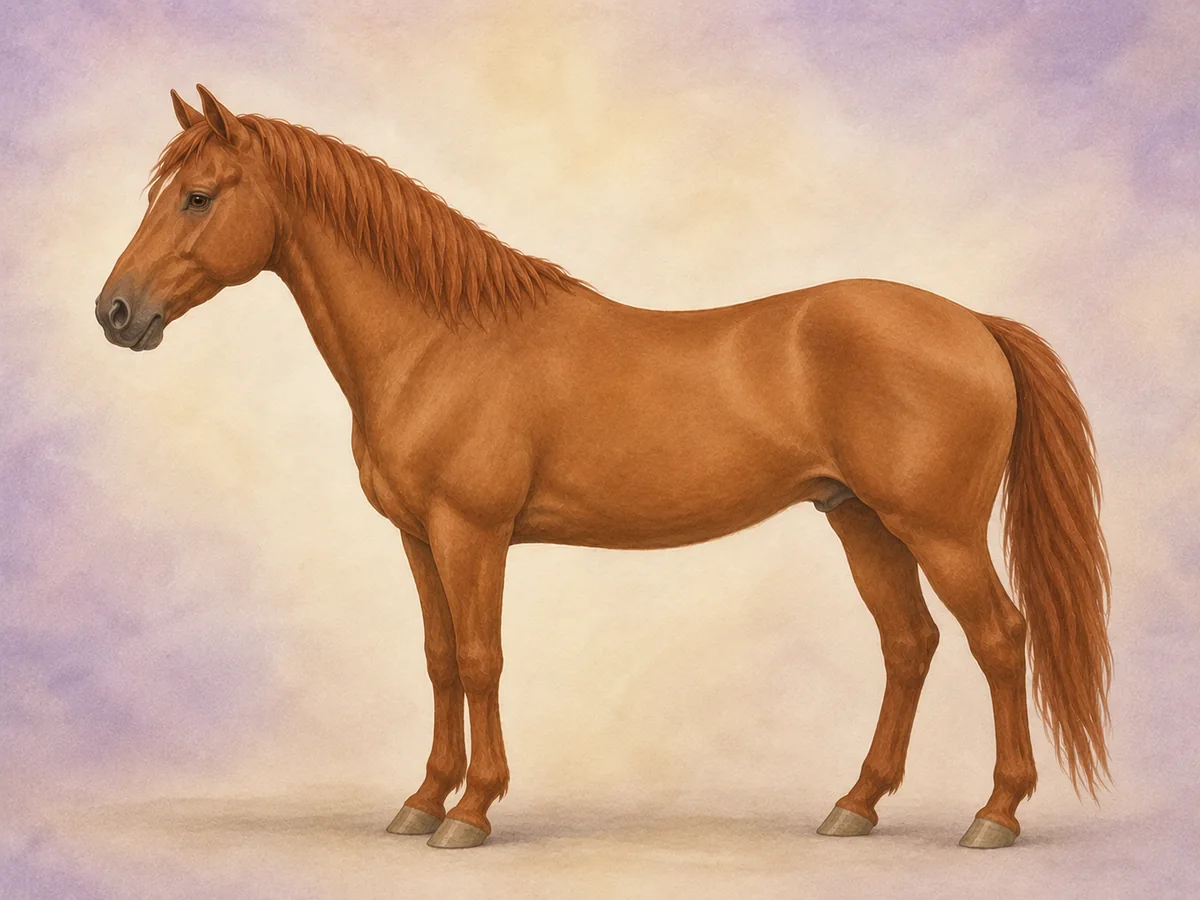
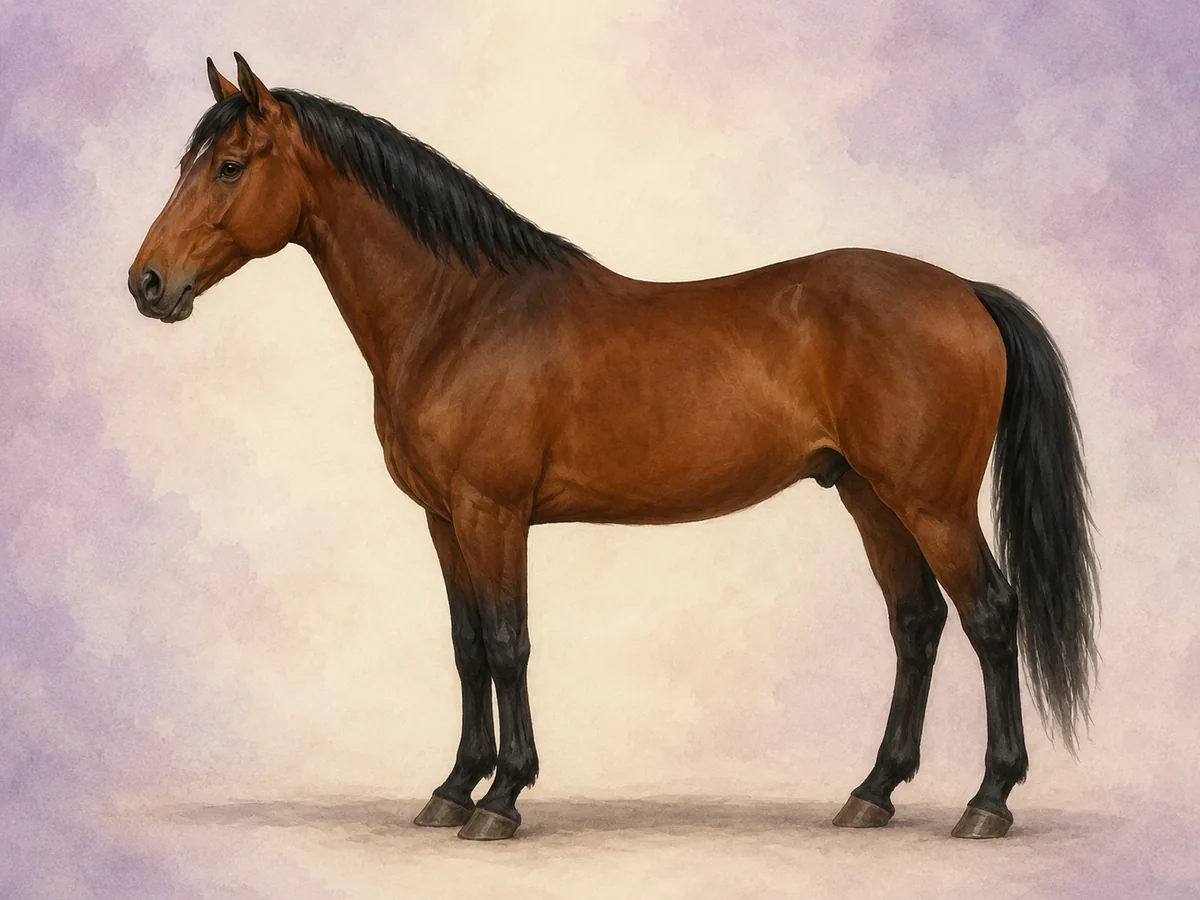
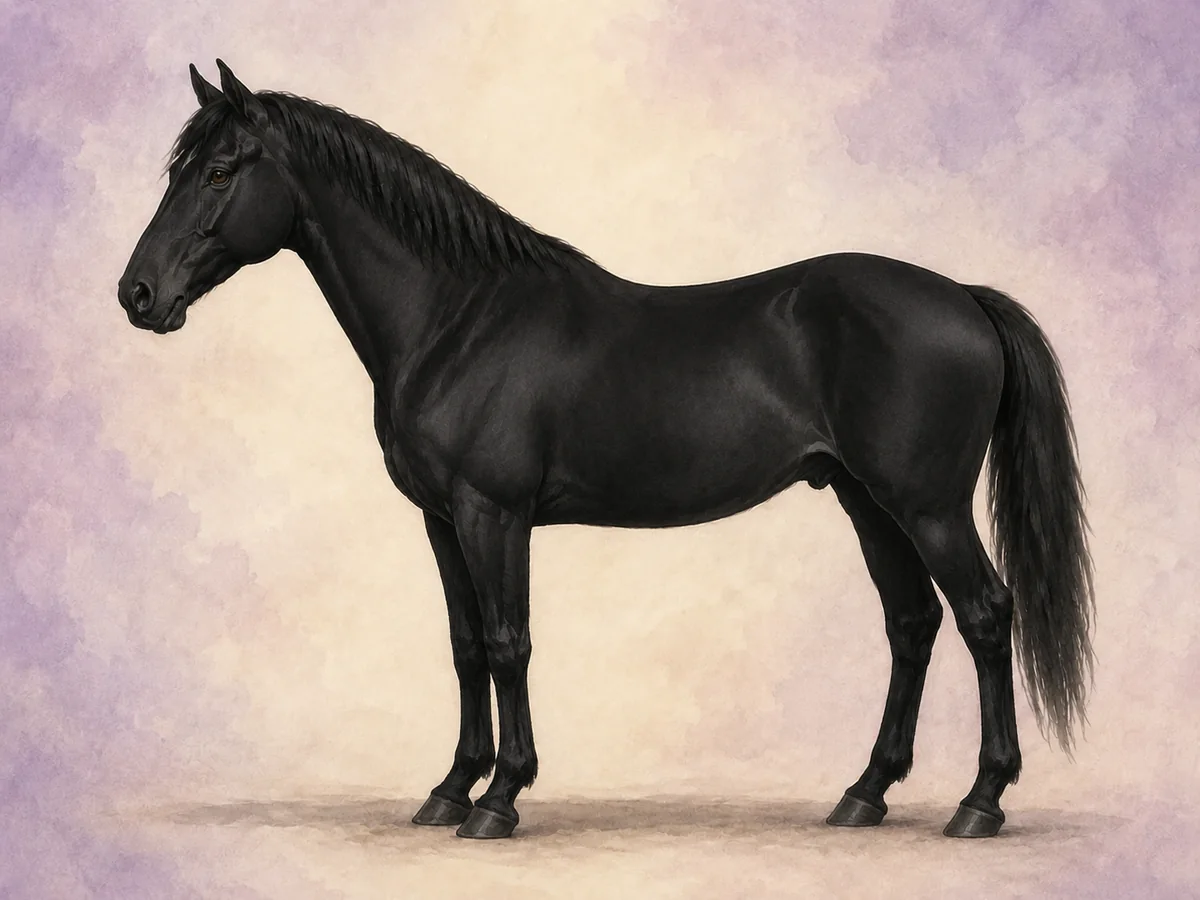
Base colours
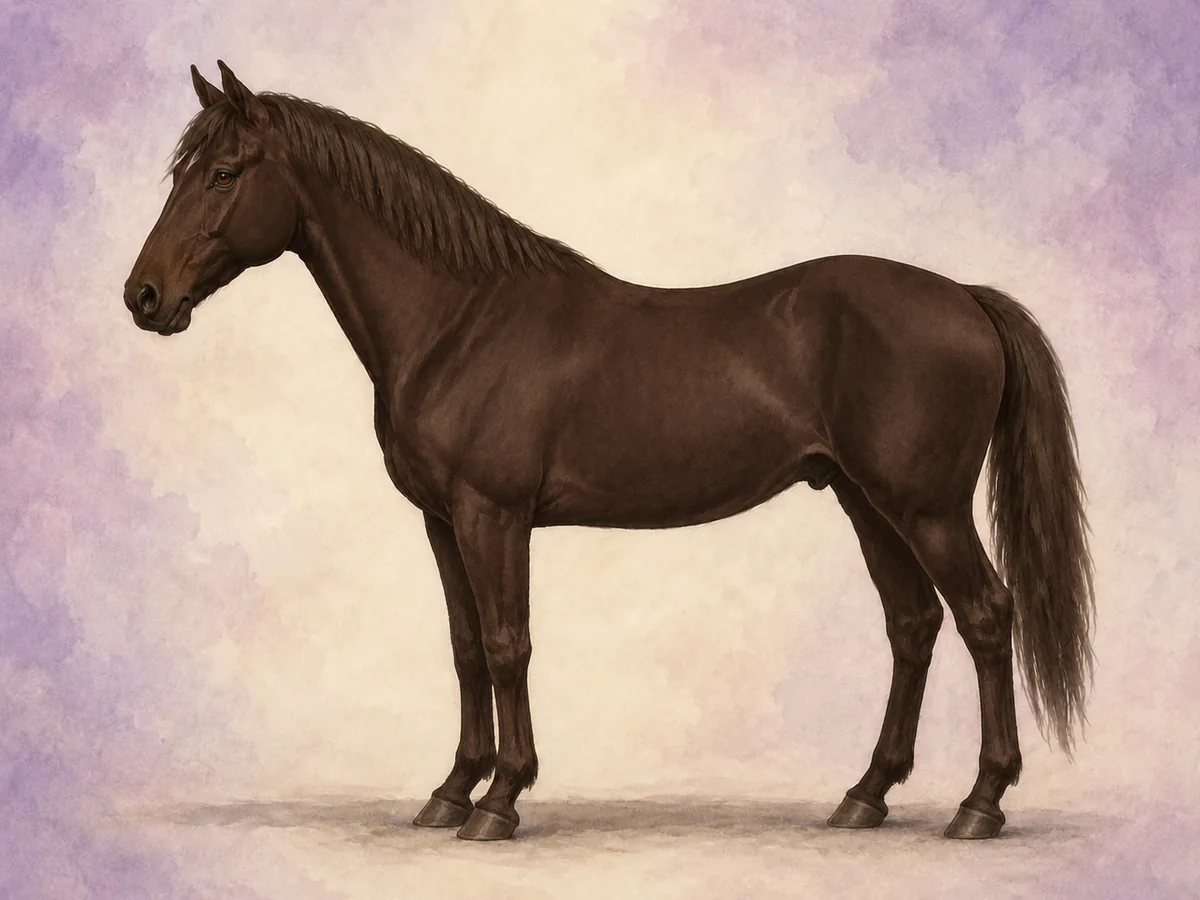
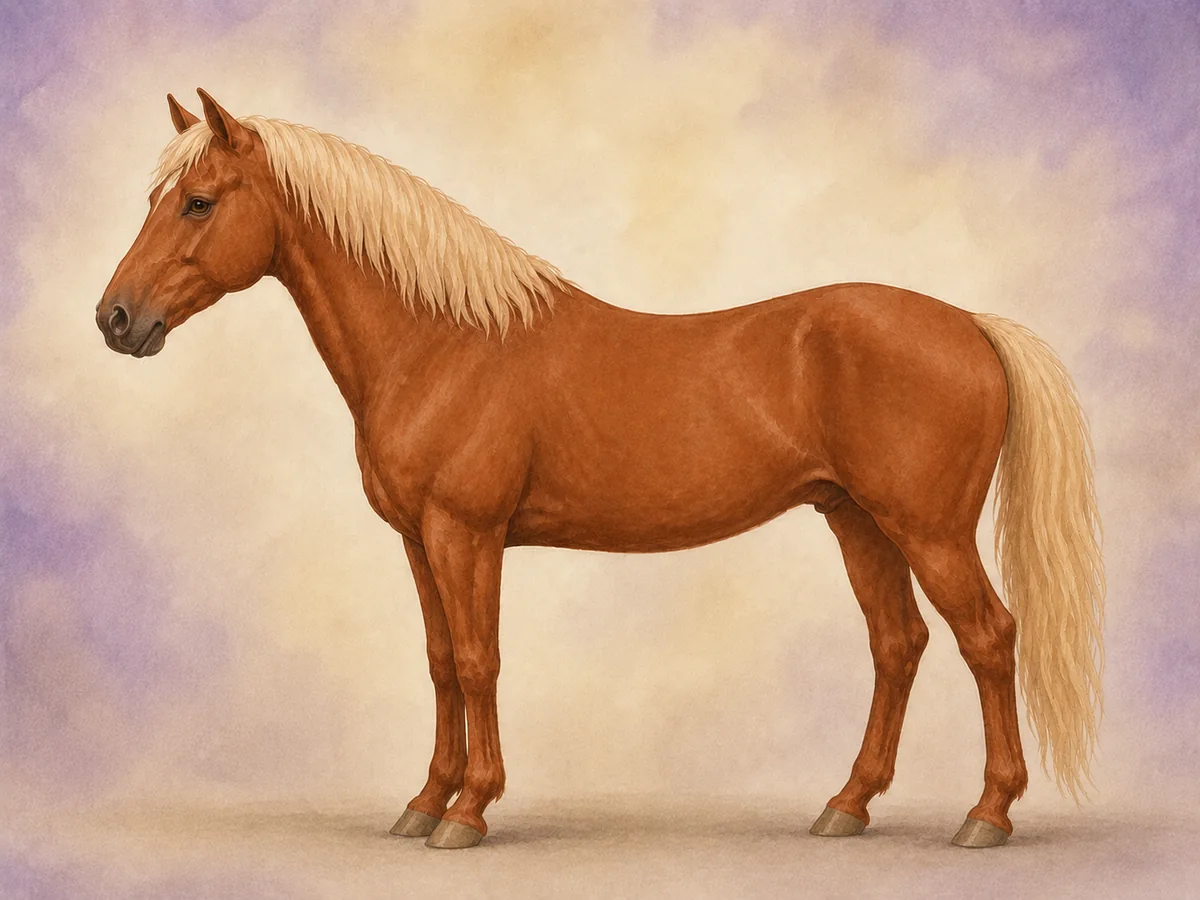
The three colours that all other horse colours are built on.
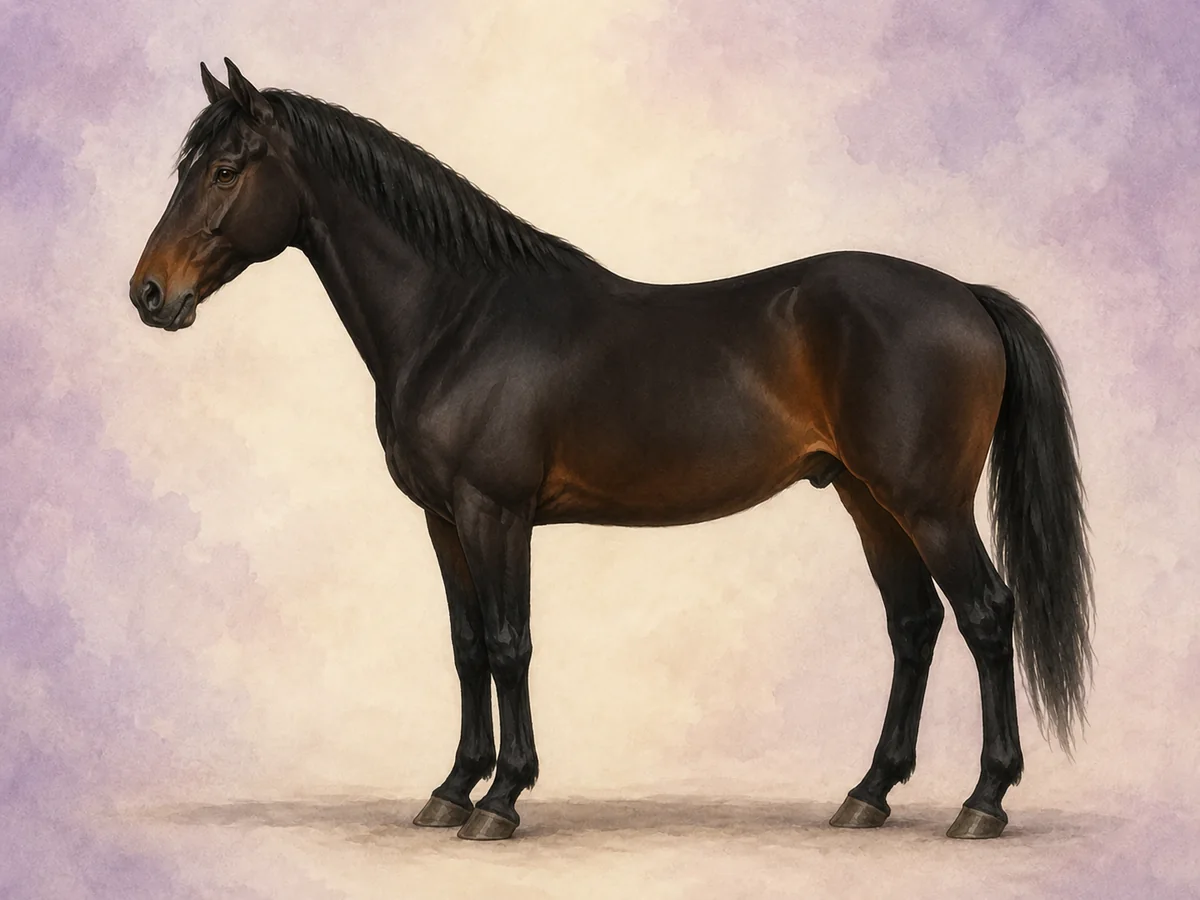
Base colour variants
Darker and lighter variations of the three base colours.
Dilutions
Genes that lighten a base colour, such as palomino or buckskin.
-
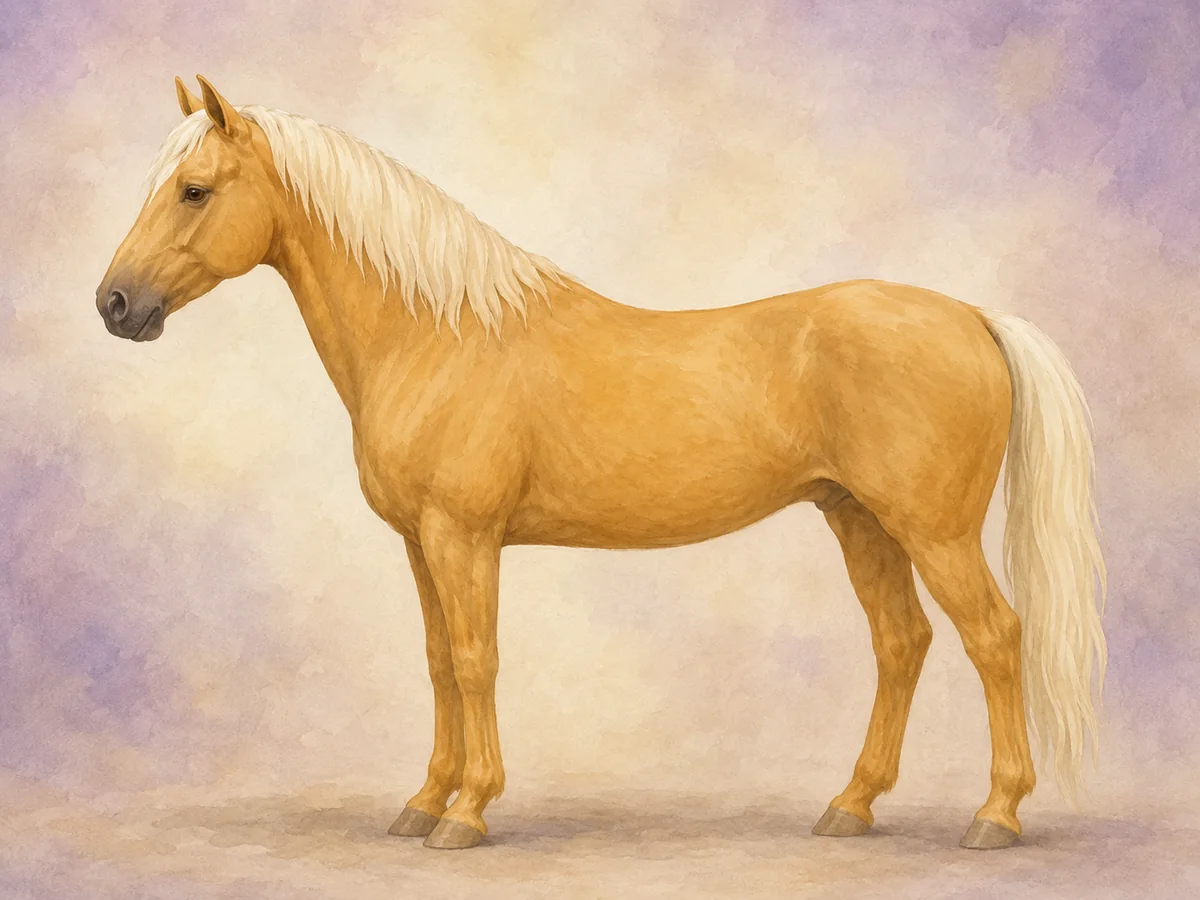
Palomino
You recognise a palomino by its golden coat with light, almost white mane and tail.
-
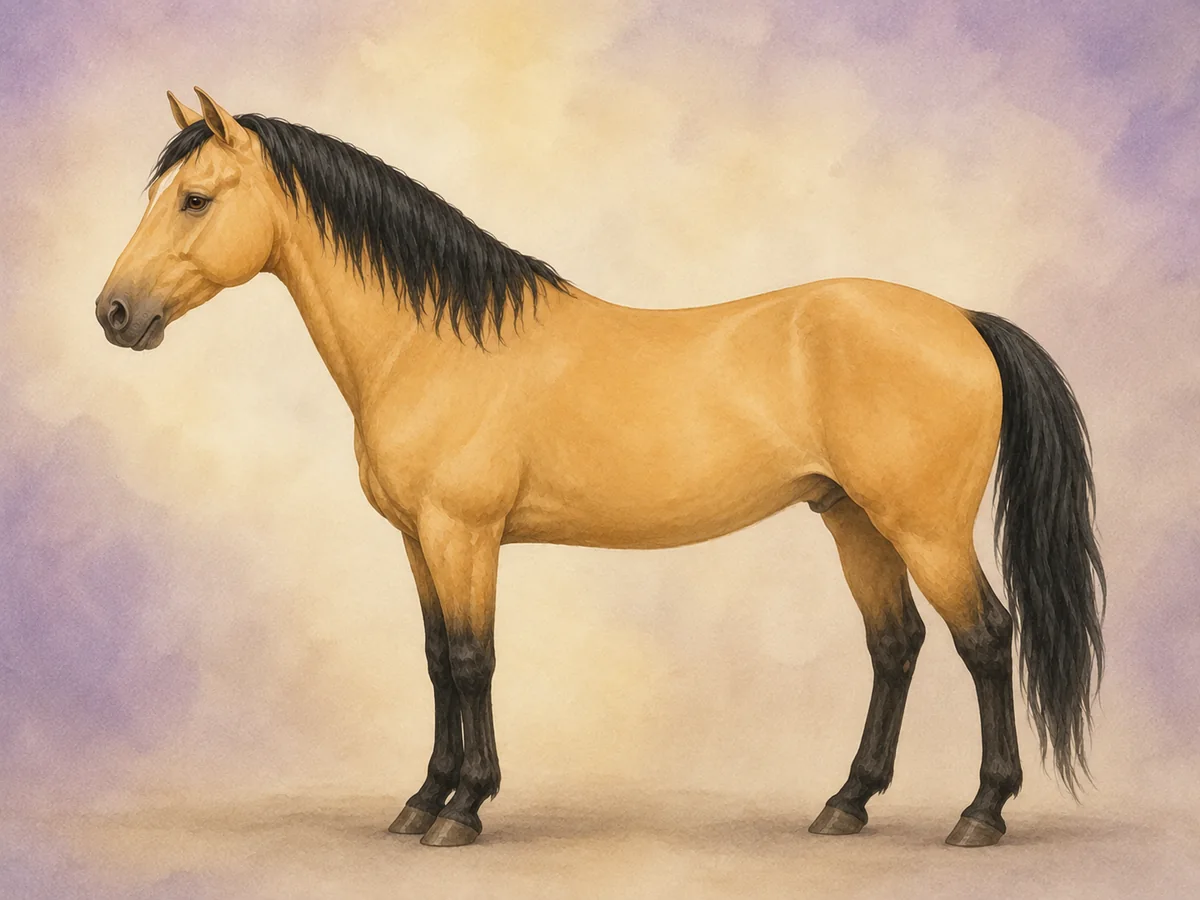
Buckskin
A buckskin has a golden body with black mane, tail and lower legs.
-
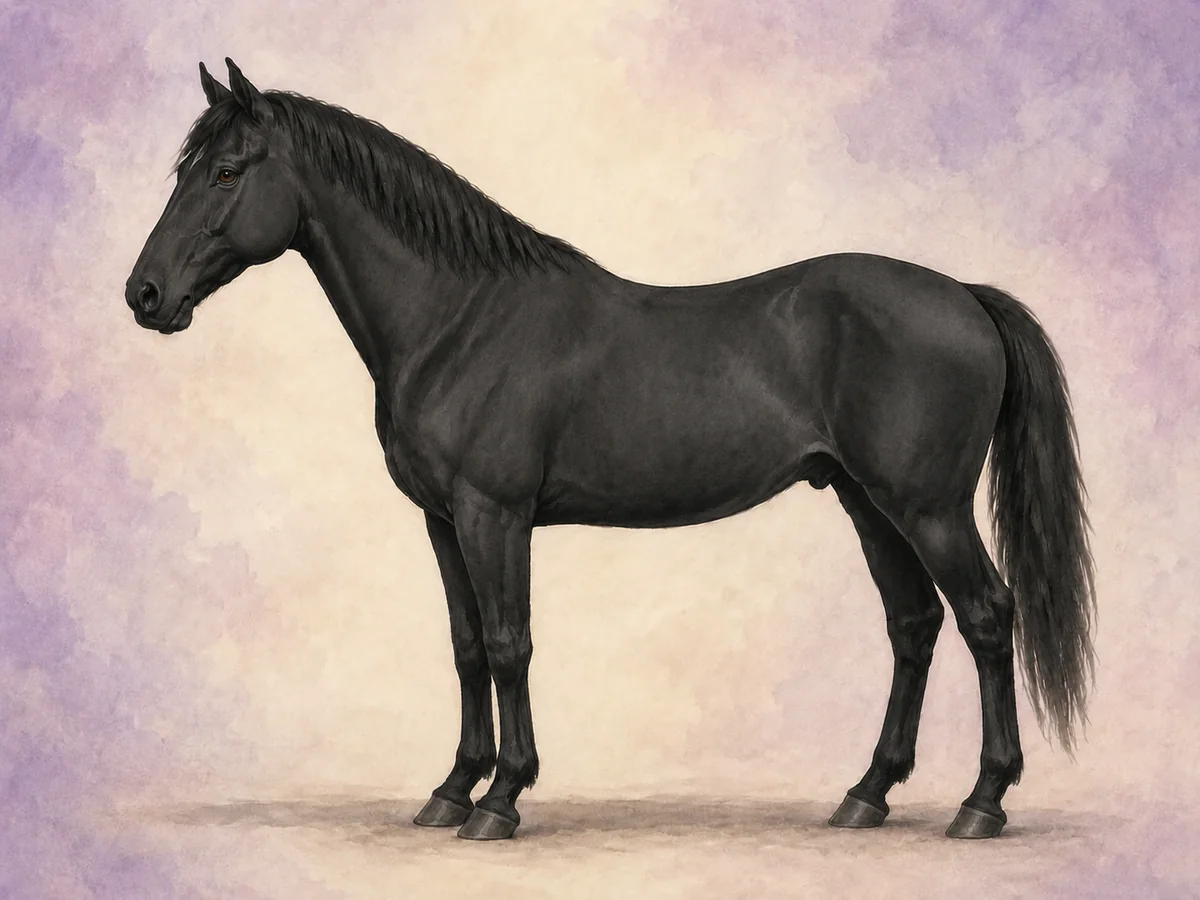
Smoky black
A black horse with a single cream gene; often indistinguishable from ordinary black.
-
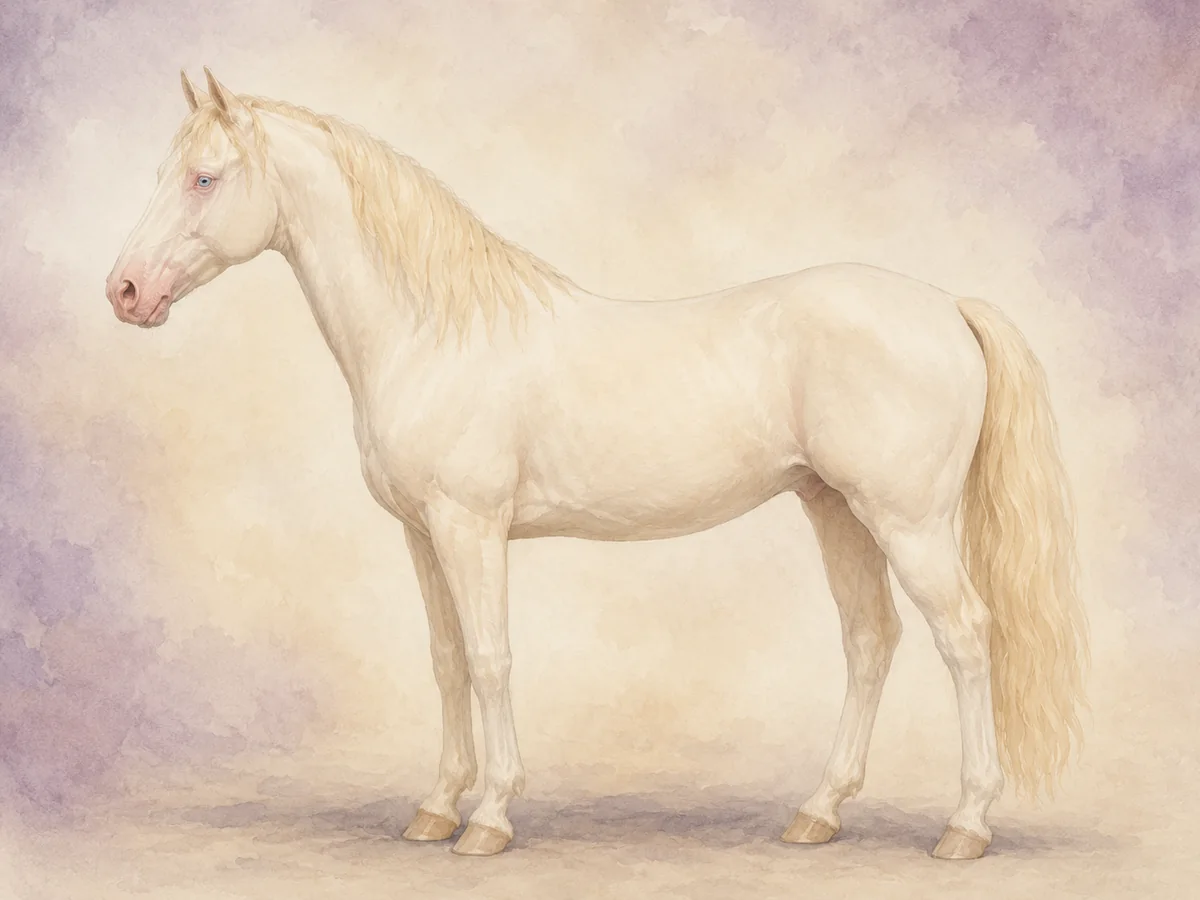
Cremello
An almost white, cream-coloured chestnut with pink skin and blue eyes.
-
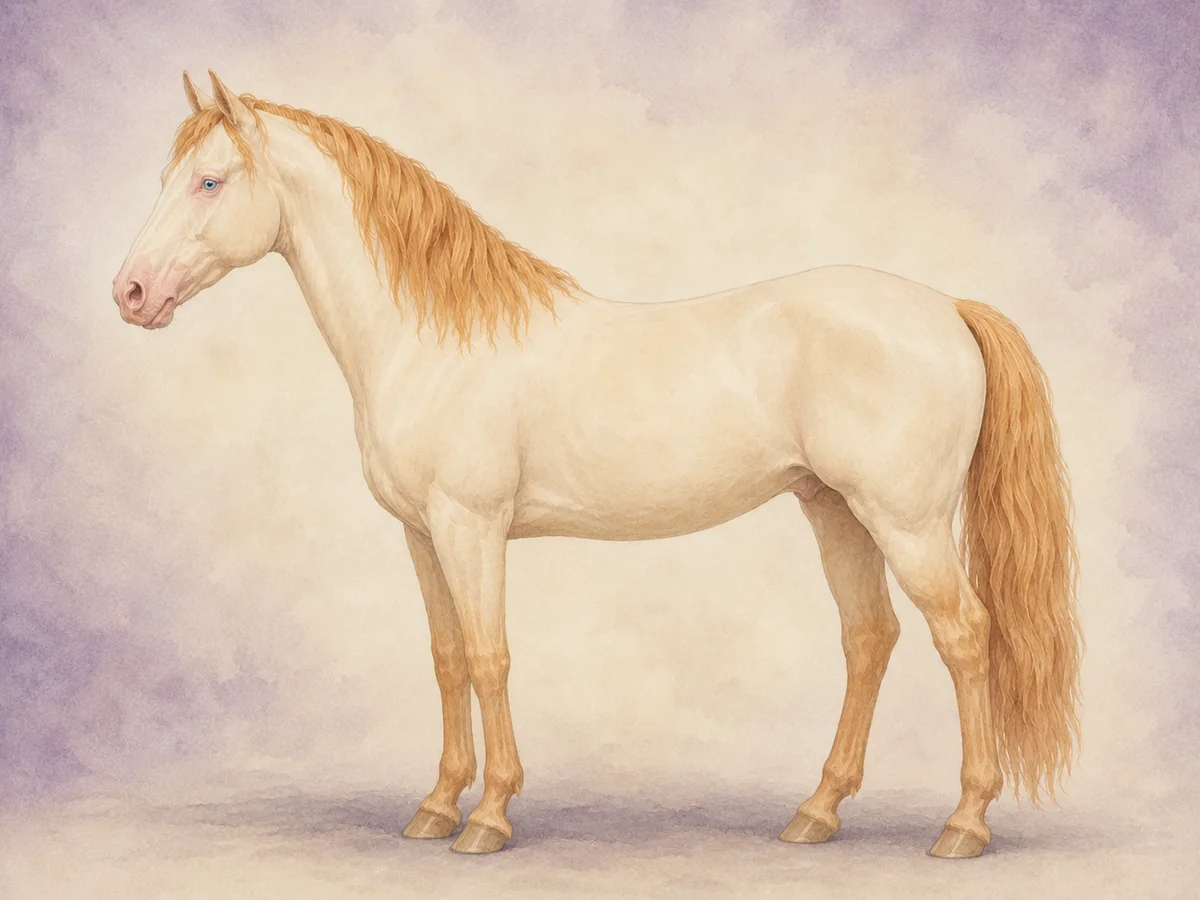
Perlino
Like cremello, but on a bay base: slightly warmer mane and tail.
-
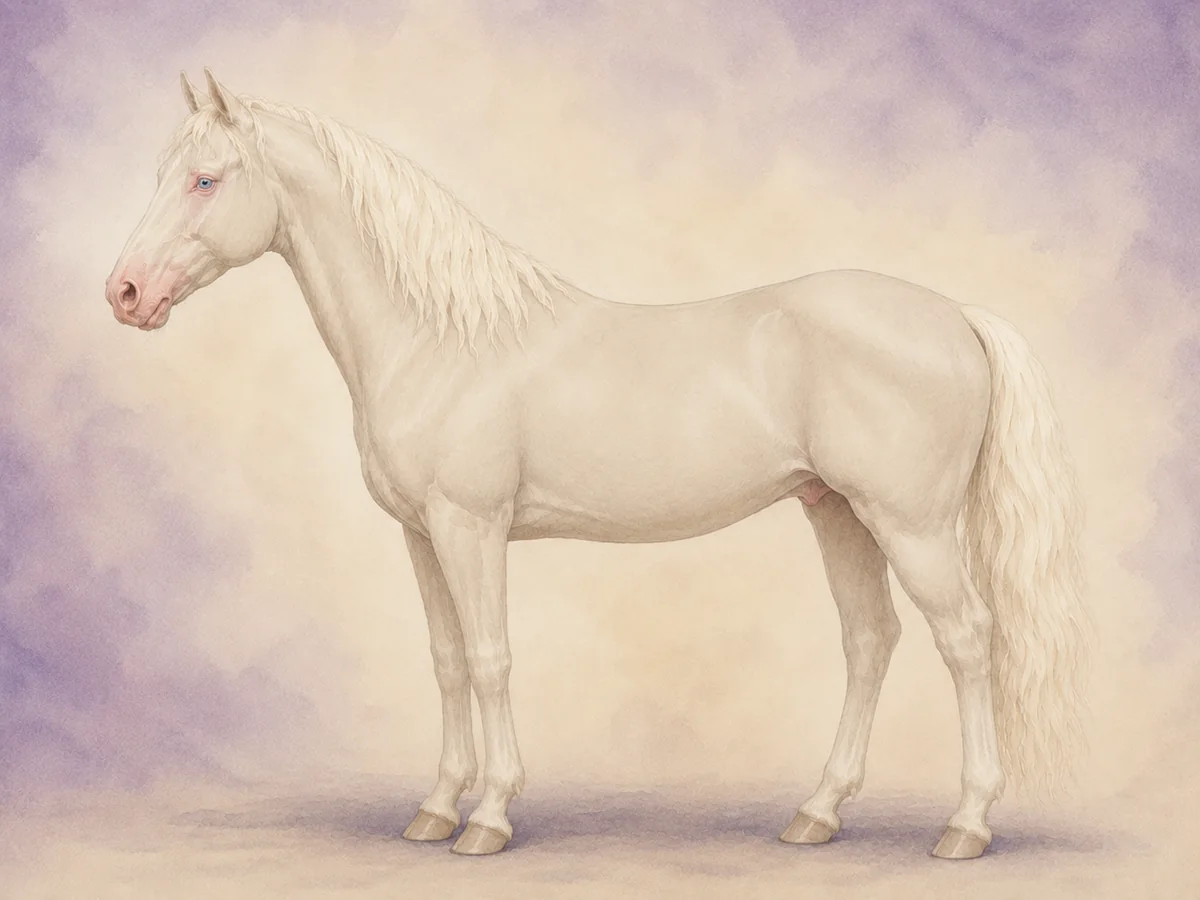
Smoky cream
Double cream on a black base; cream-coloured with blue eyes.
-
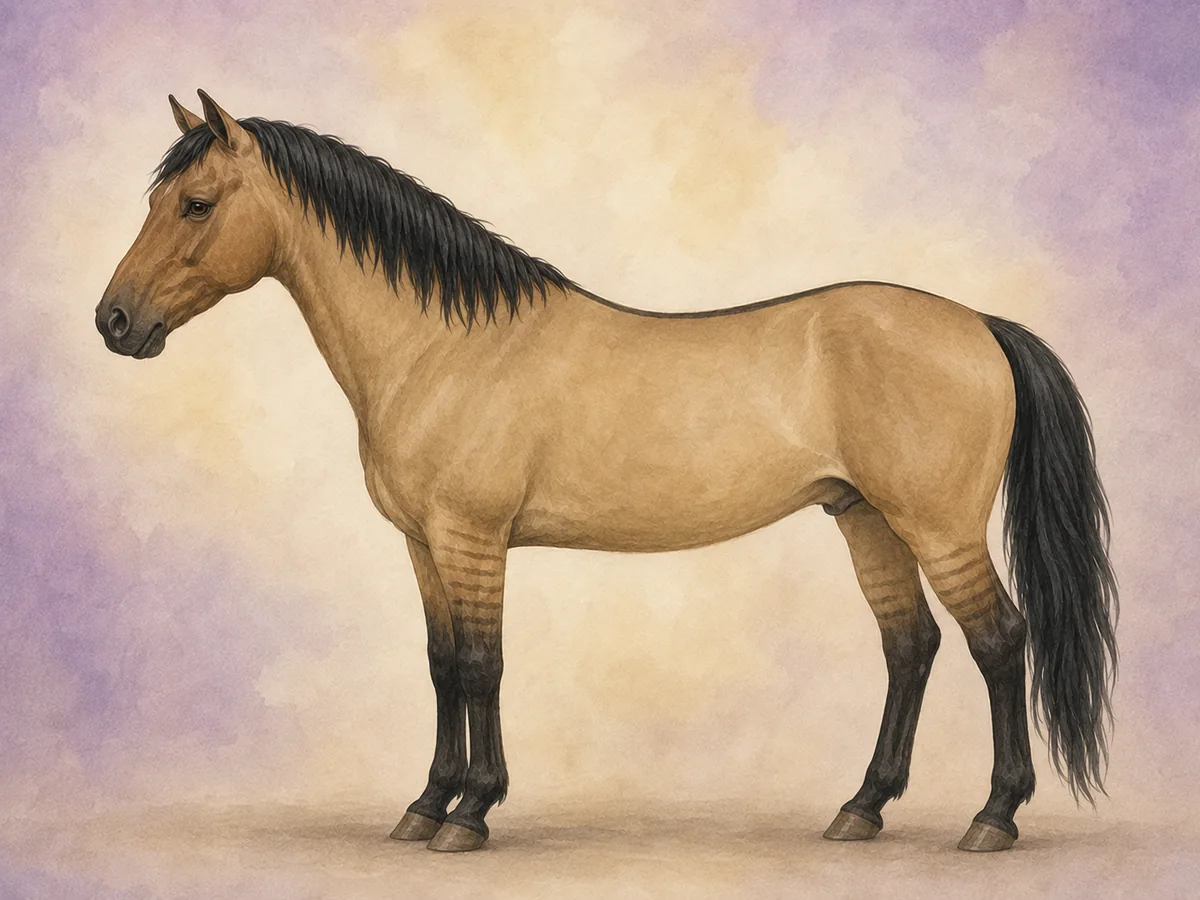
Dun
You recognise a dun by the dorsal stripe along the back and the primitive markings.
-
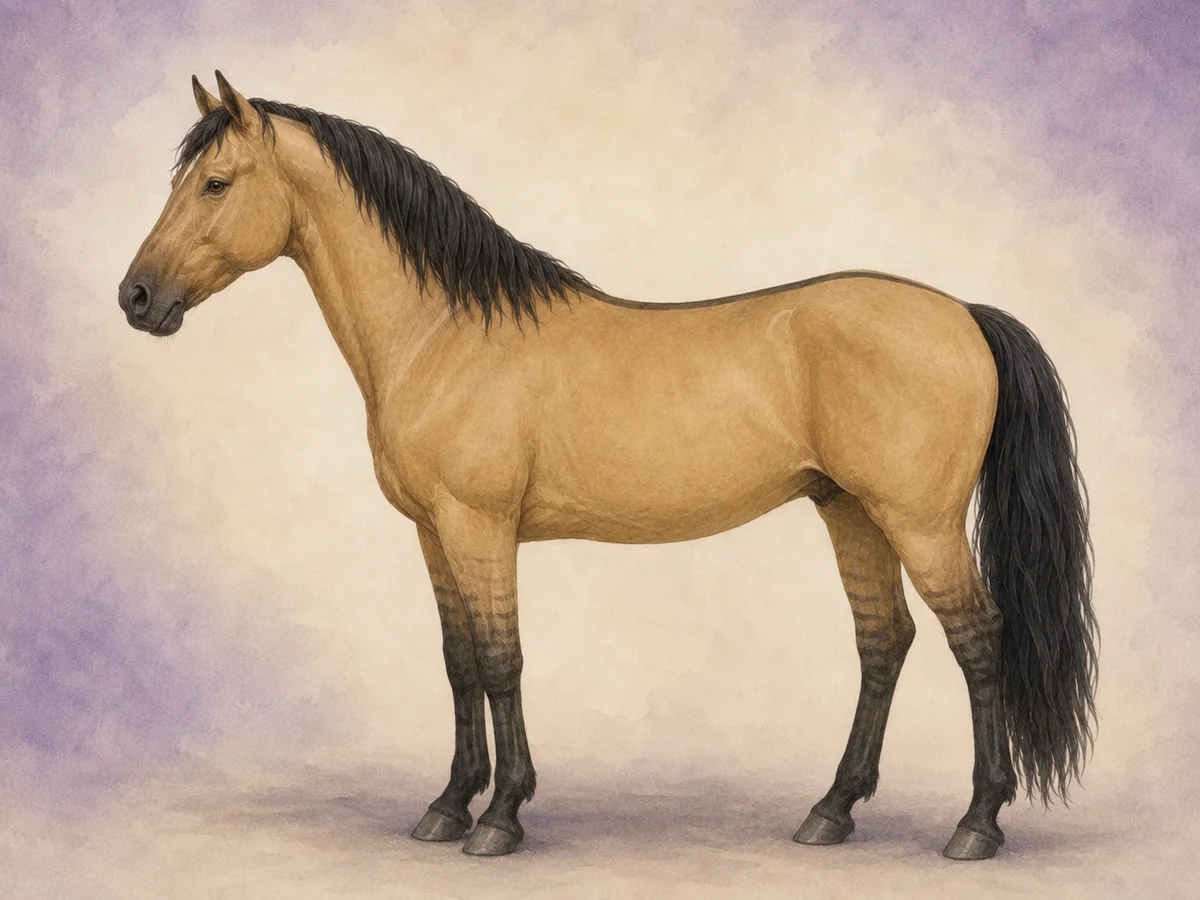
Bay dun
Dun on a bay base: a yellowish-brown body, black points and a dorsal stripe.
-
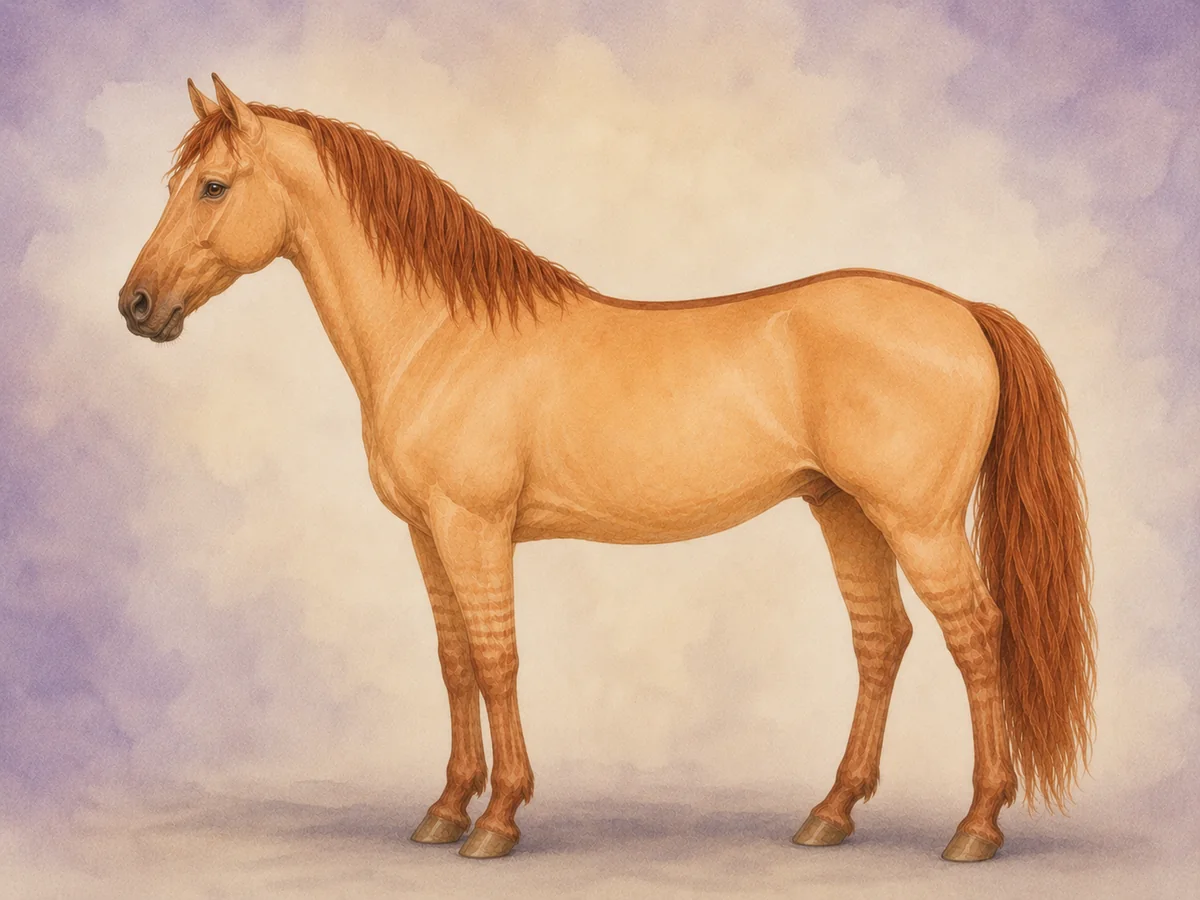
Red dun
Dun on a chestnut base: a peach-coloured body with a red-brown dorsal stripe.
-
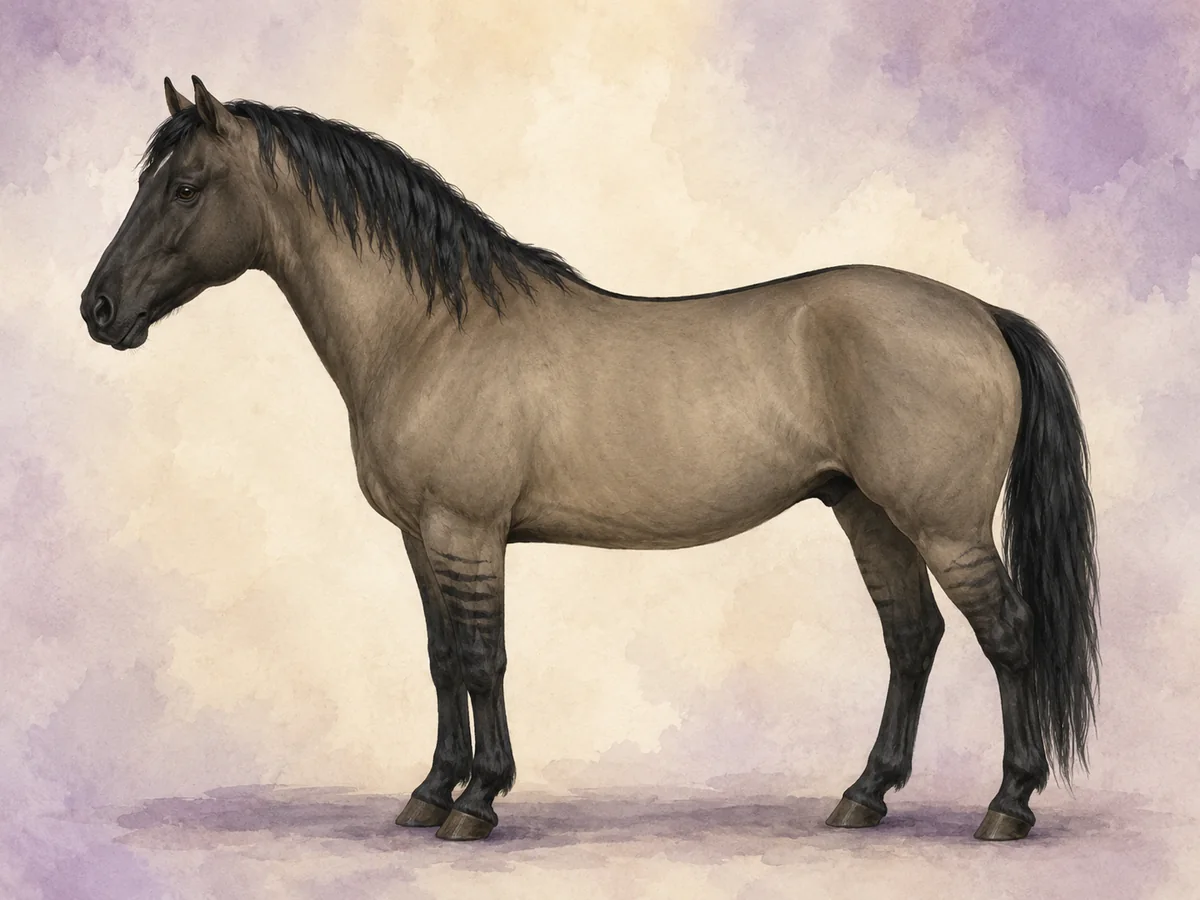
Grullo
Dun on a black base: a mouse-grey body with a black dorsal stripe.
-
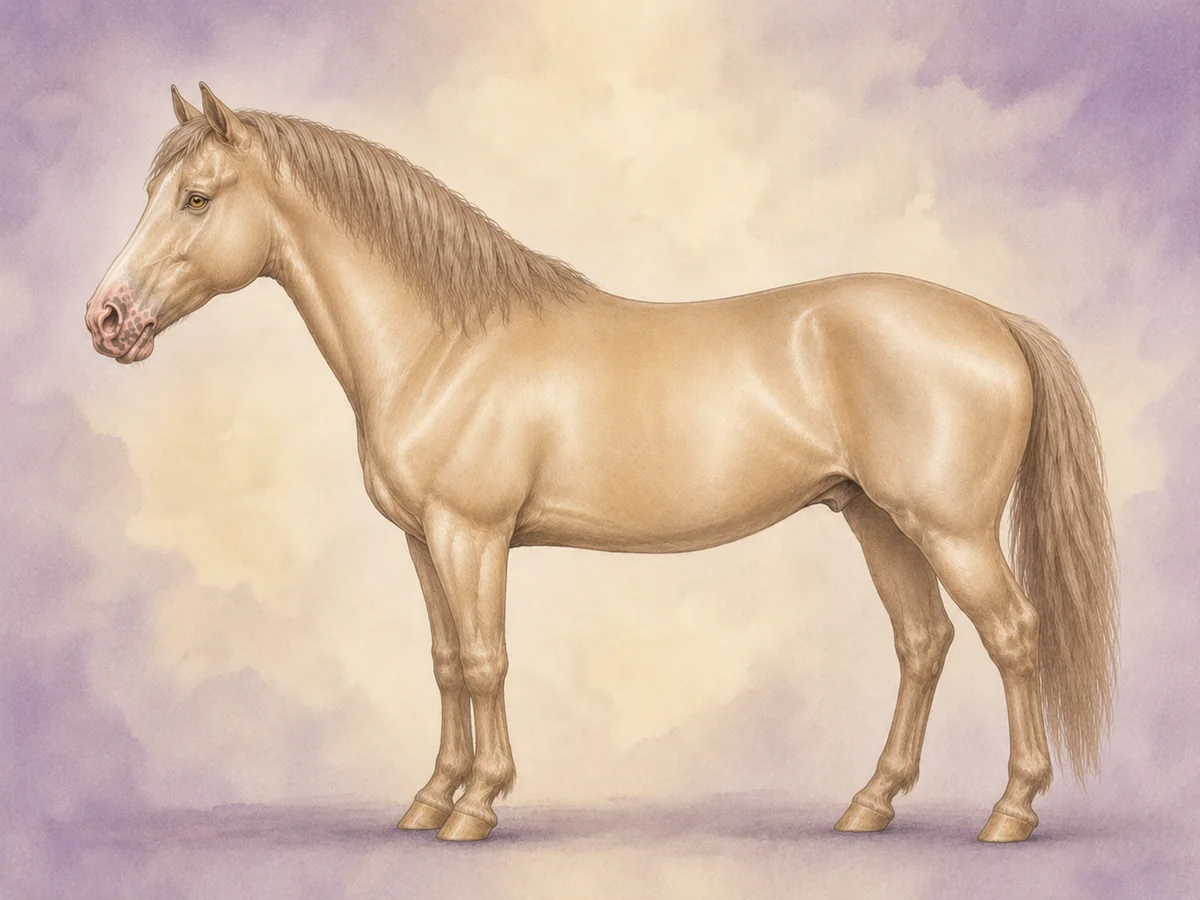
Champagne
Champagne gives a metallic sheen, pinkish/mottled skin and light (amber) eyes.
-
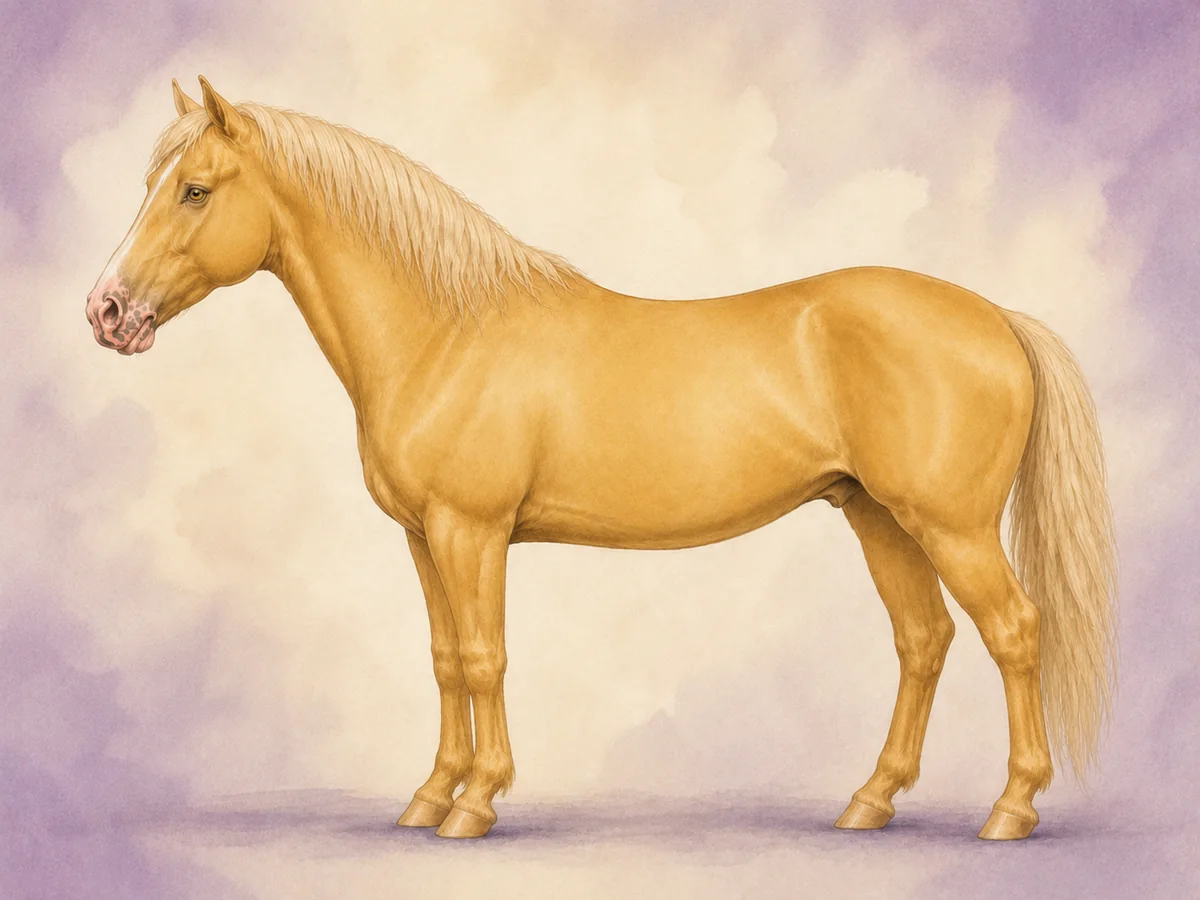
Gold champagne
Champagne on a chestnut base: golden, with pink/mottled skin and amber eyes.
-
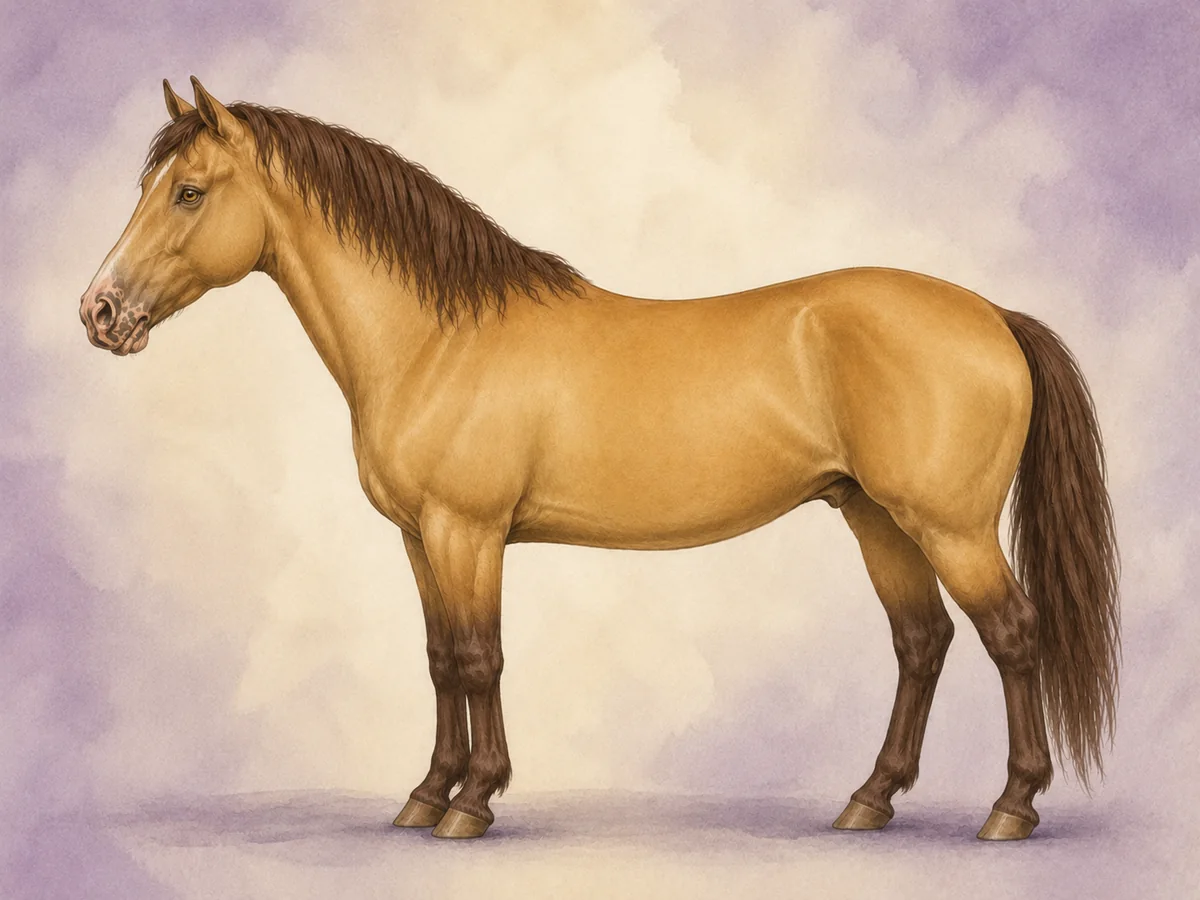
Amber champagne
Champagne on a bay base: golden-brown body with chocolate points.
-
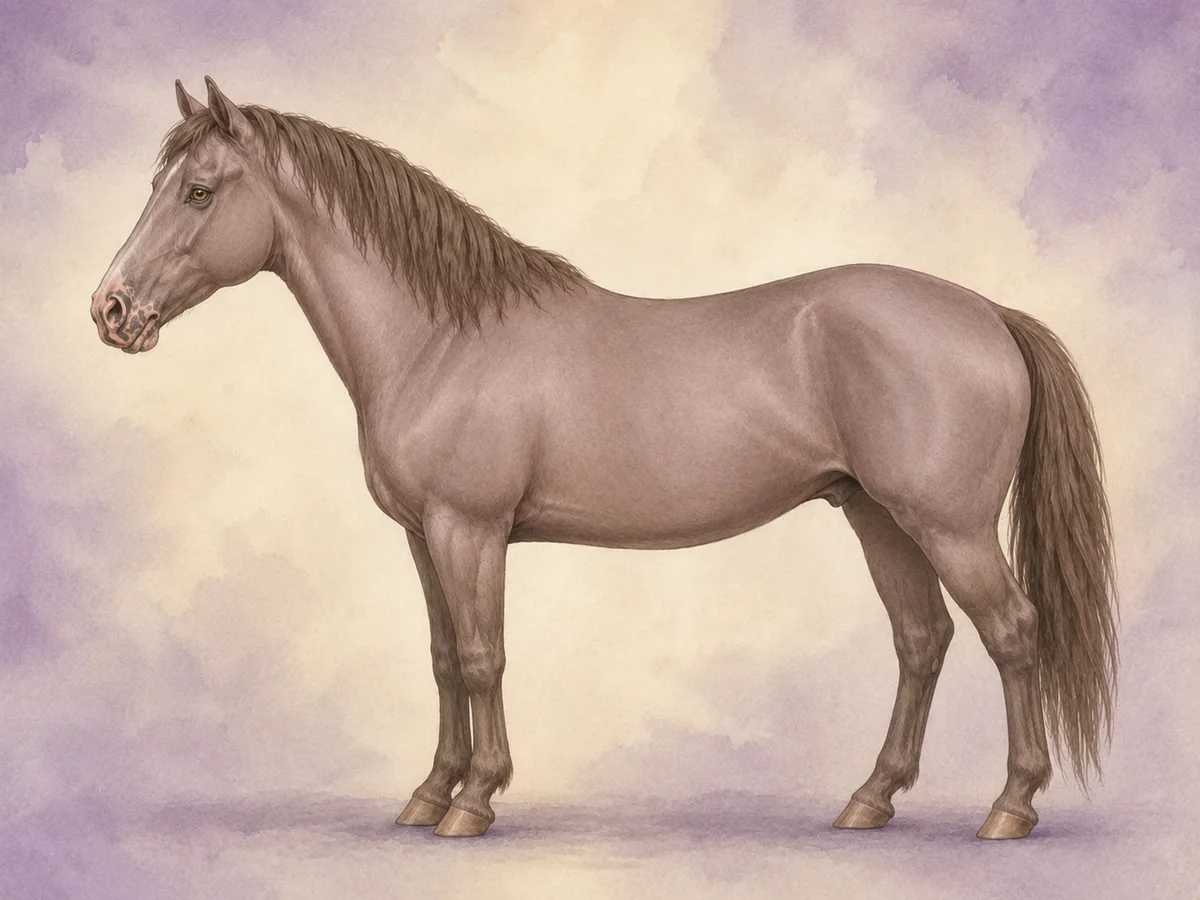
Classic champagne
Champagne on a black base: a warm lilac-brown shade.
Grey and roan
White hairs through the coat: greys turn white with age, roans do not.
-
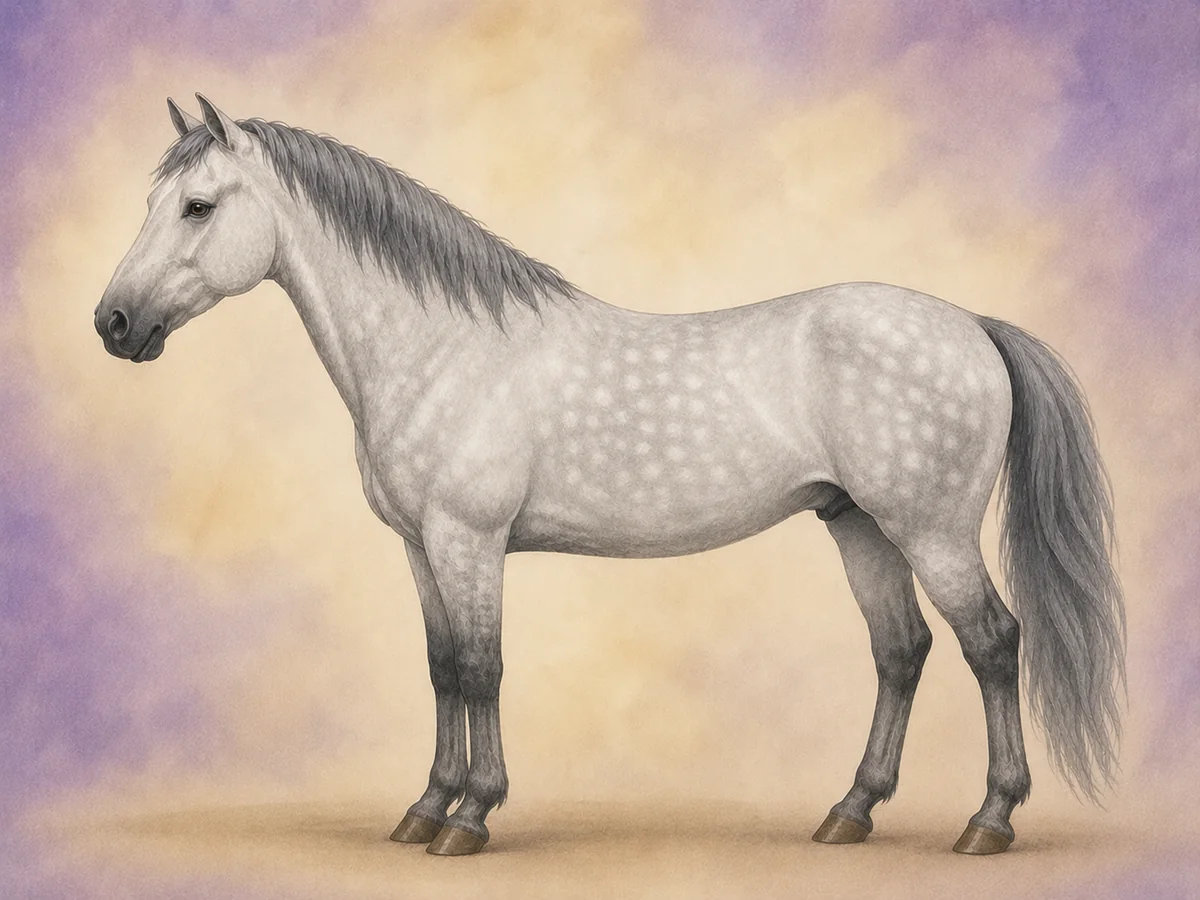
Grey
A grey turns whiter year after year, whatever colour it was born.
-
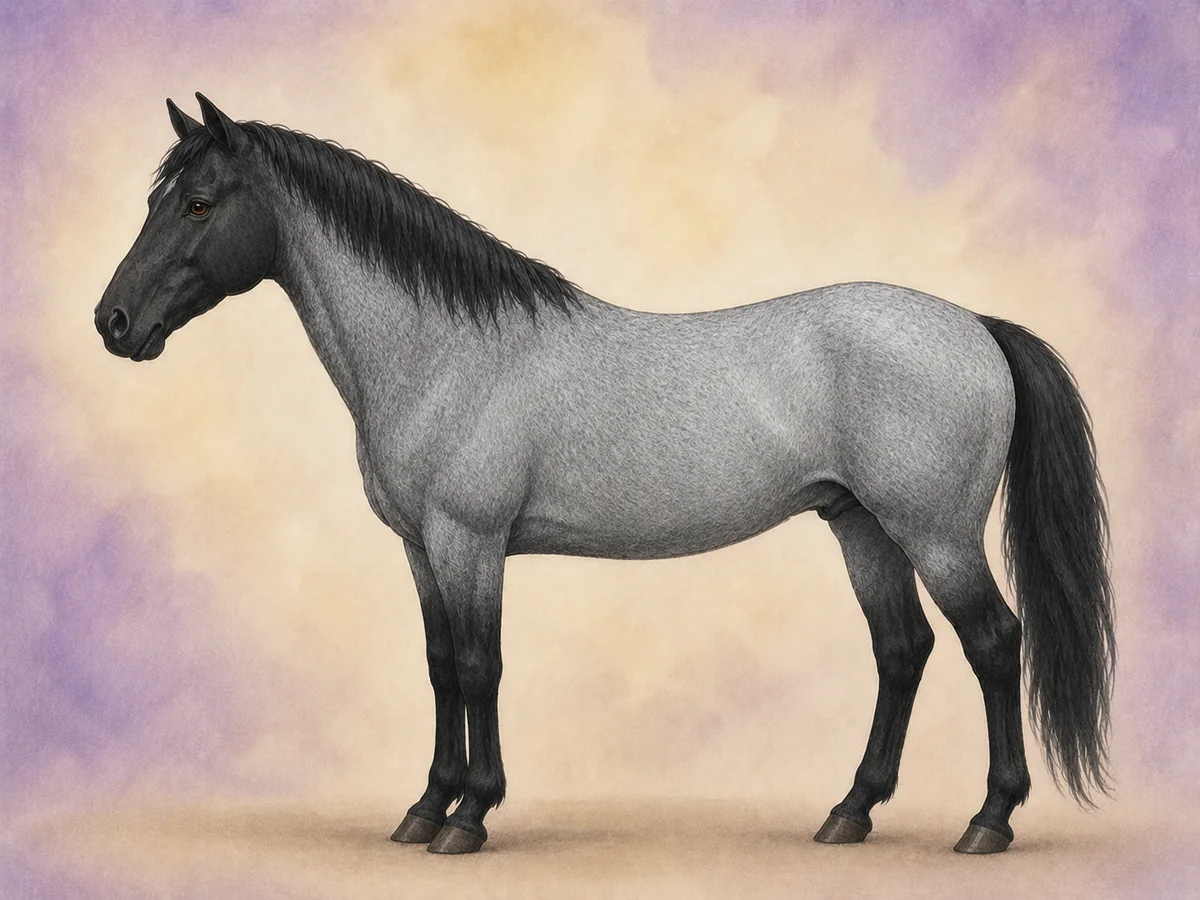
Roan
In roan, white and coloured hairs mix on the body, while head and legs stay coloured.
-
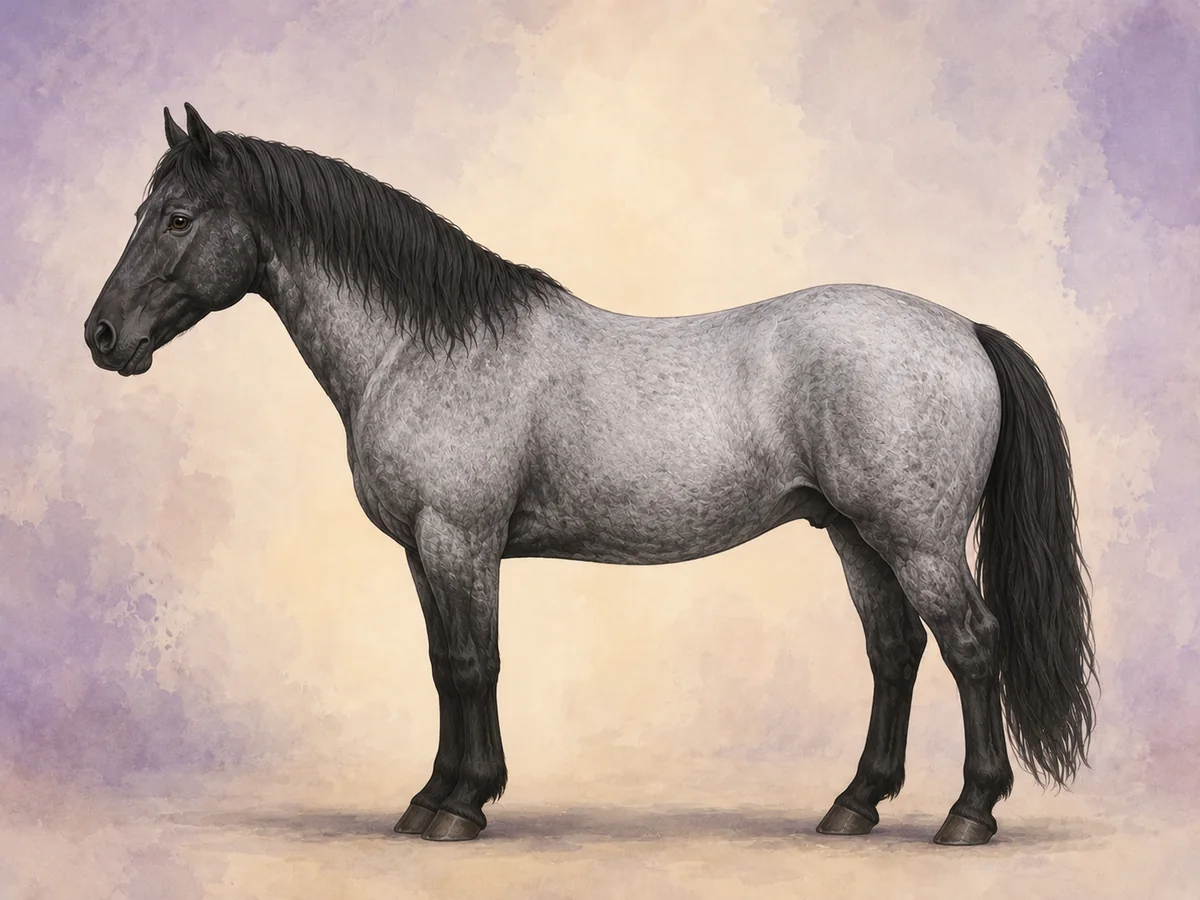
Blue roan
Roan on a black base: a blue-grey barrel with a black head and legs.
-
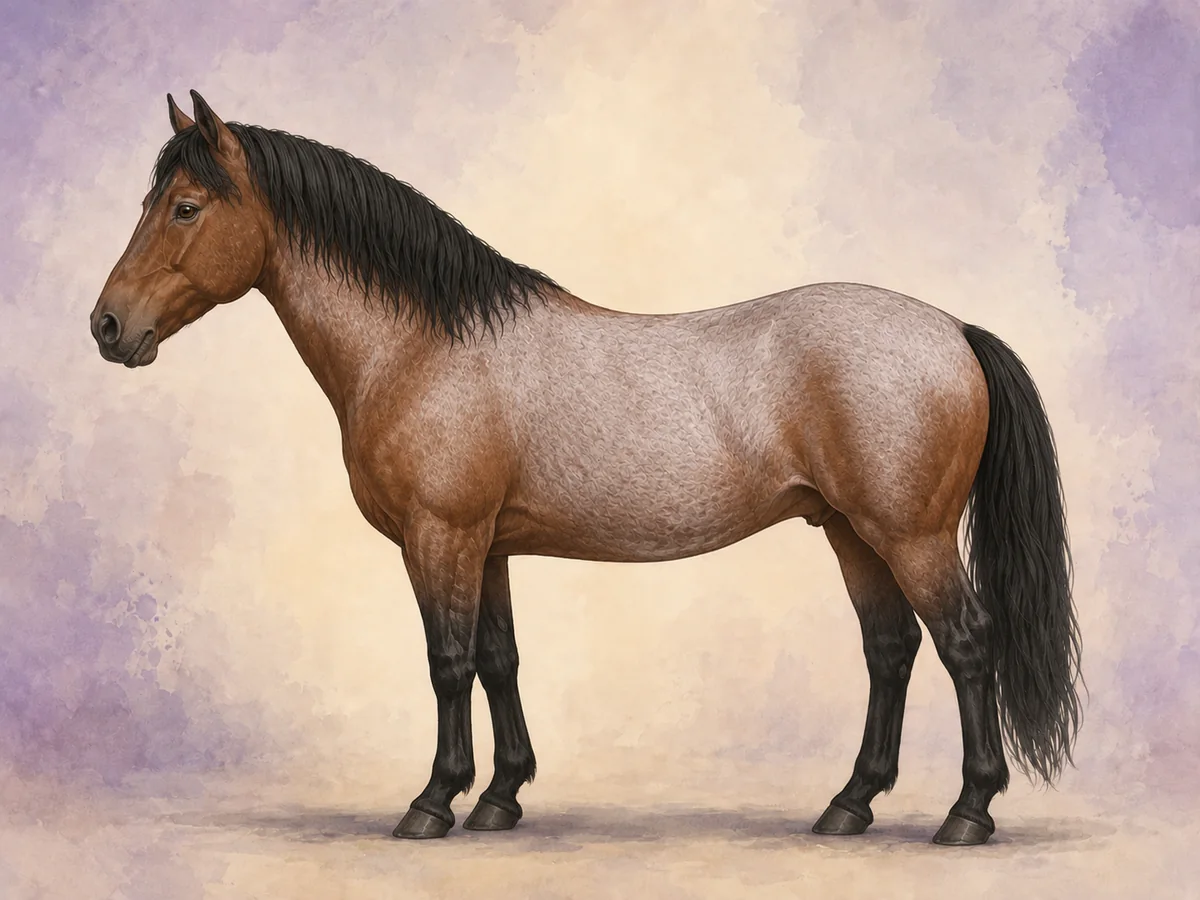
Bay roan
Roan on a bay base: a red-grey barrel with black points.
-
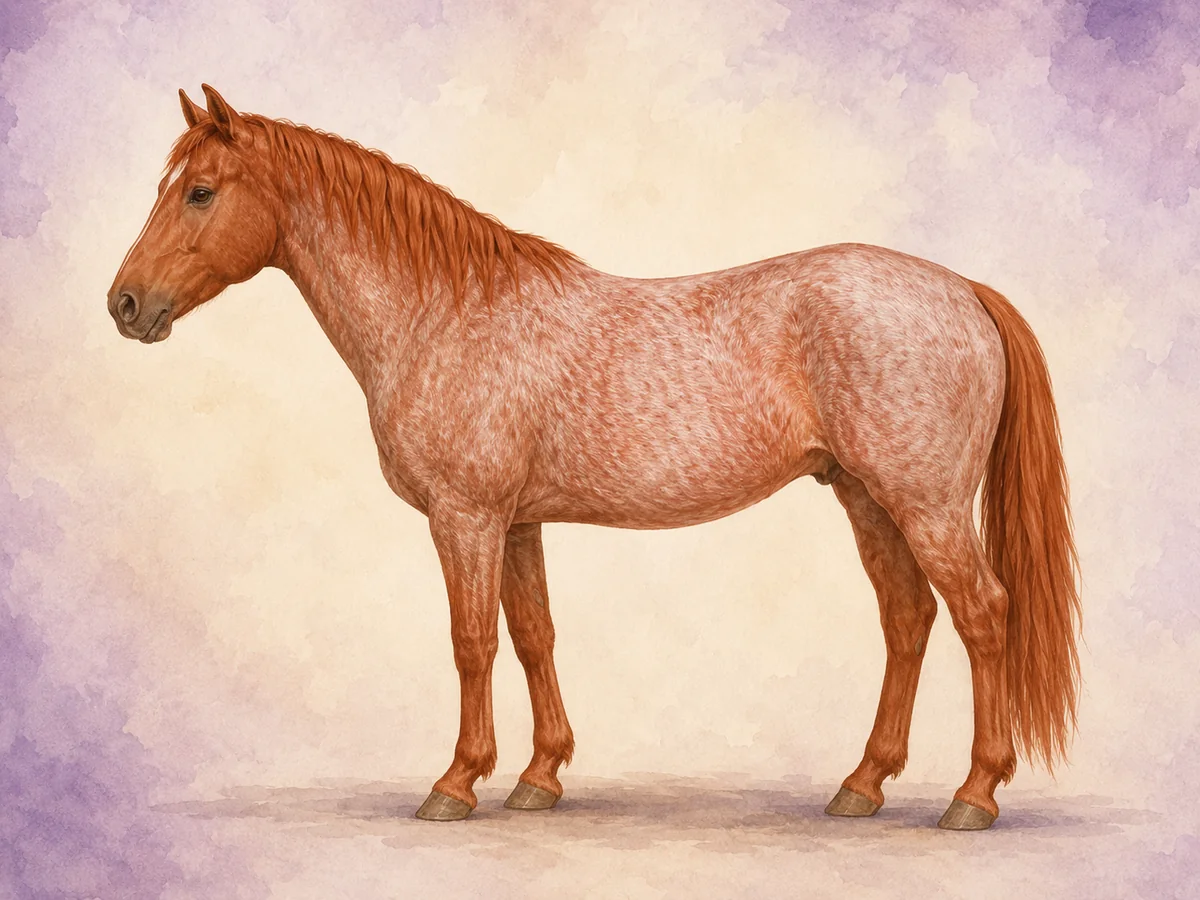
Strawberry roan
Roan on a chestnut base: a pink-red, strawberry-like barrel.
-
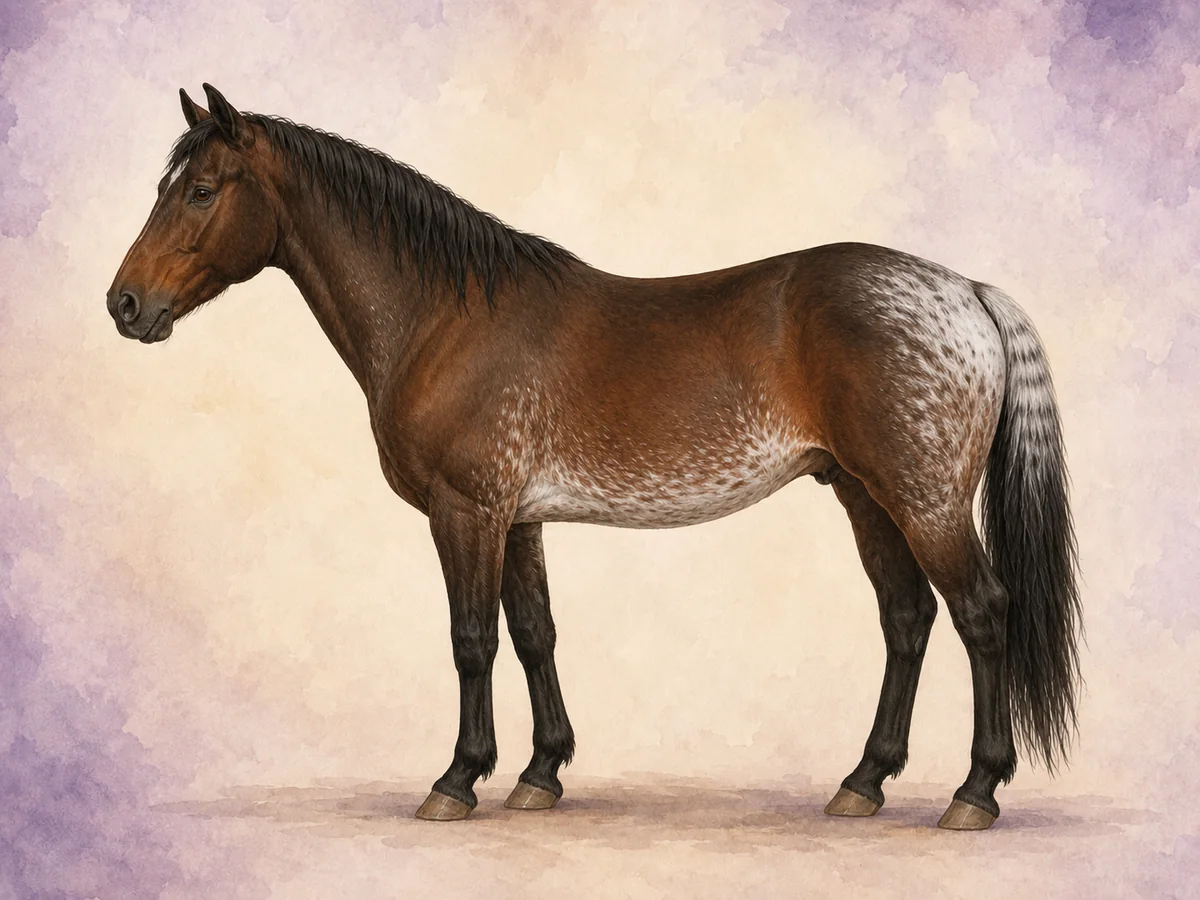
Rabicano
Scattered white hairs, mainly at the tail base and flanks, not over the whole body.
Pinto patterns
Large white patches, as on pinto horses (tobiano, overo, sabino).
-
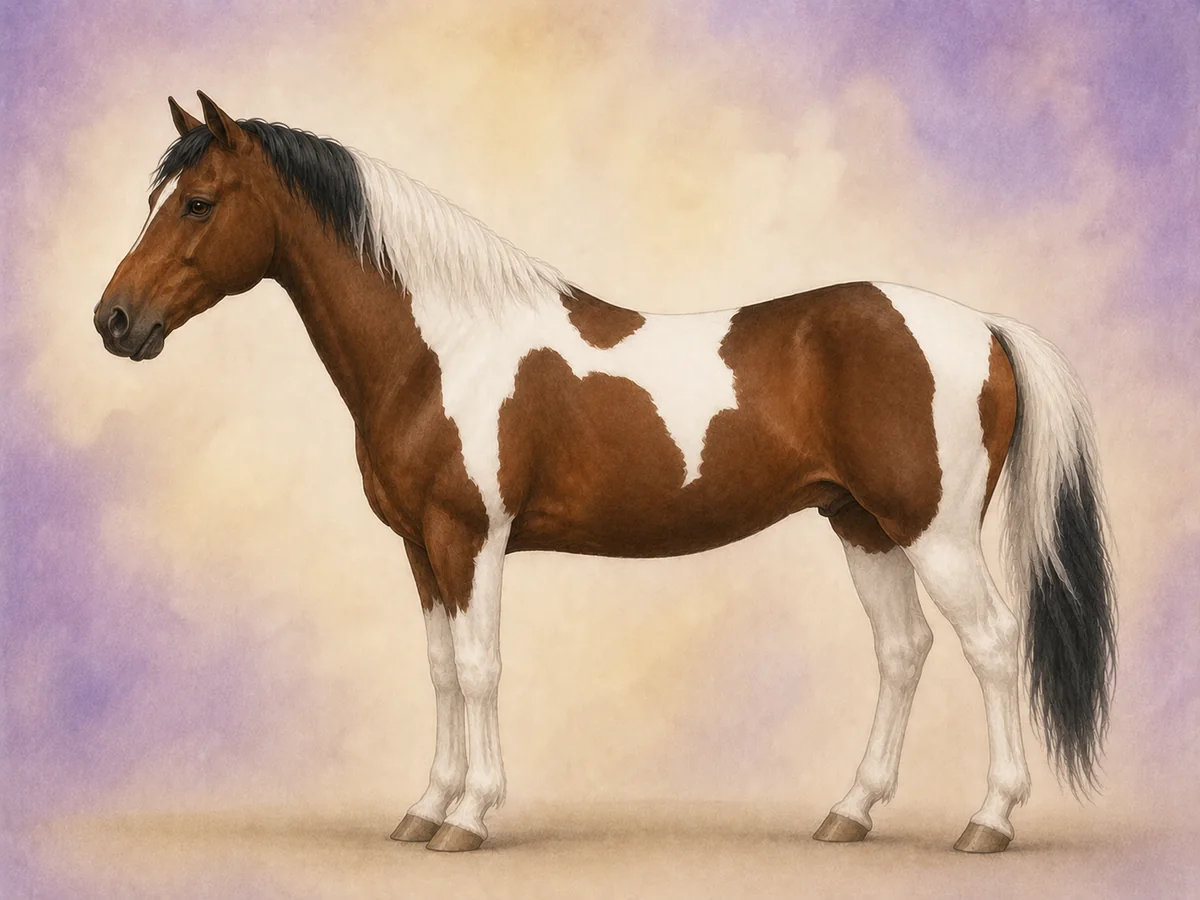
Tobiano
White patches that cross over the back, with rounded edges and usually white legs.
-
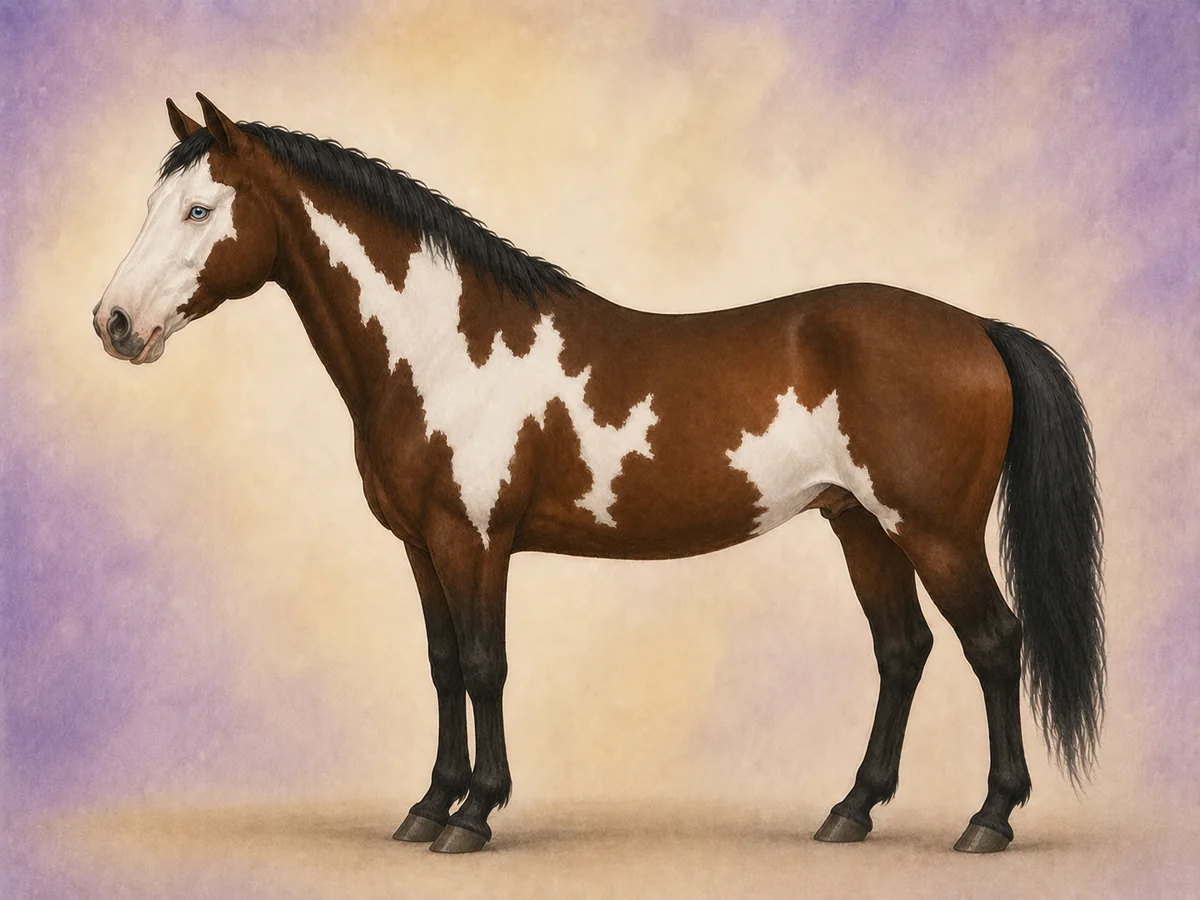
Frame overo
Horizontal white patches on the flanks, framed by colour, with the back mostly coloured.
-
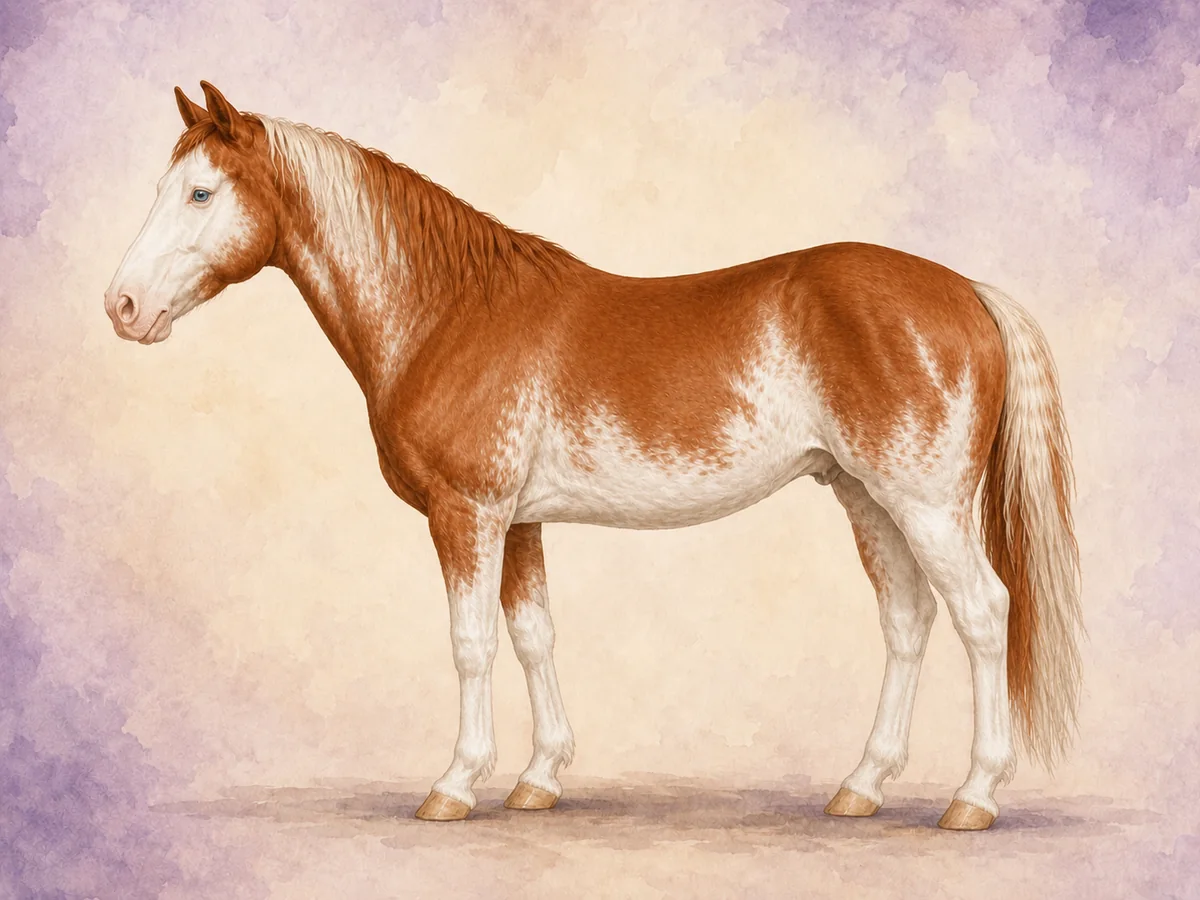
Sabino
Irregular white markings with a lot of roaning on legs, belly and face.
-
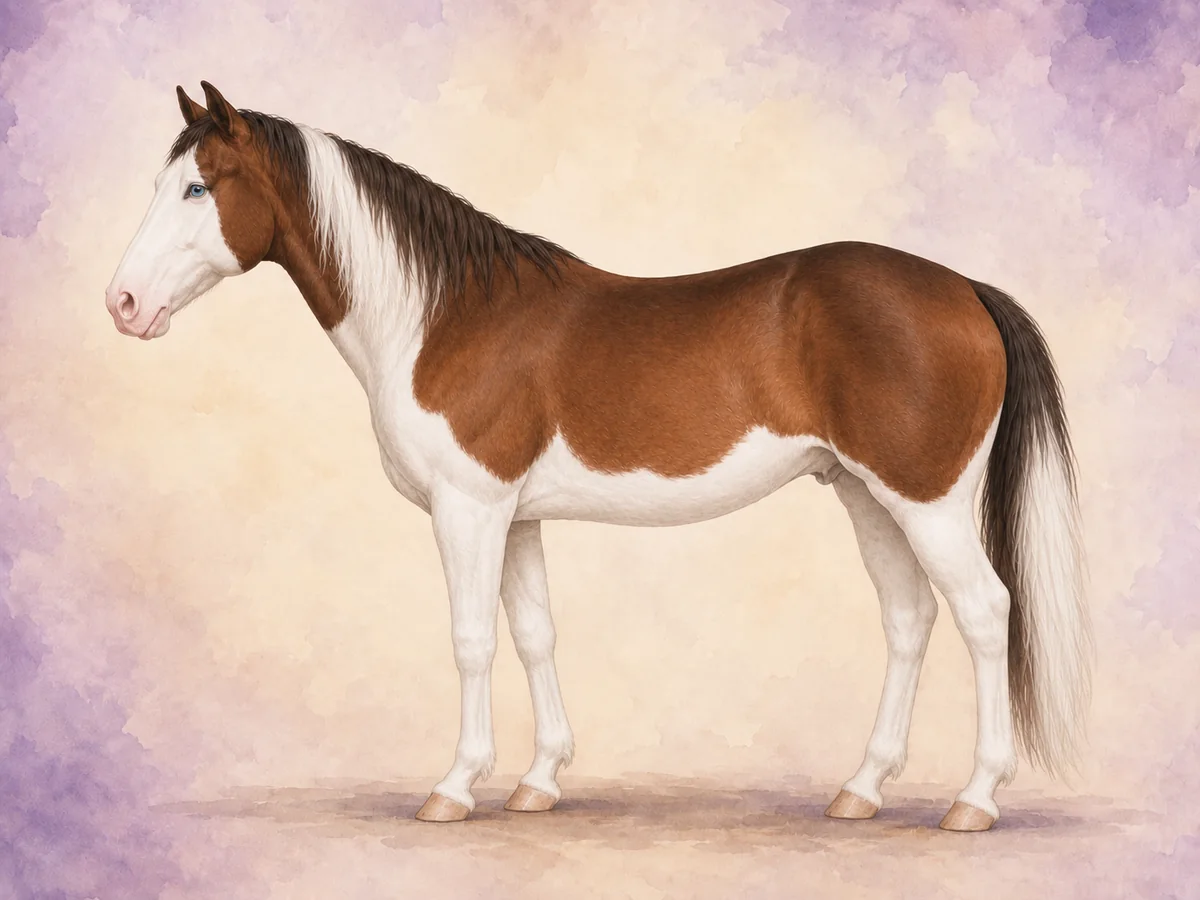
Splashed white
As if the horse was dipped in white paint from below: white legs, belly, chest and face, with blue eyes.
-
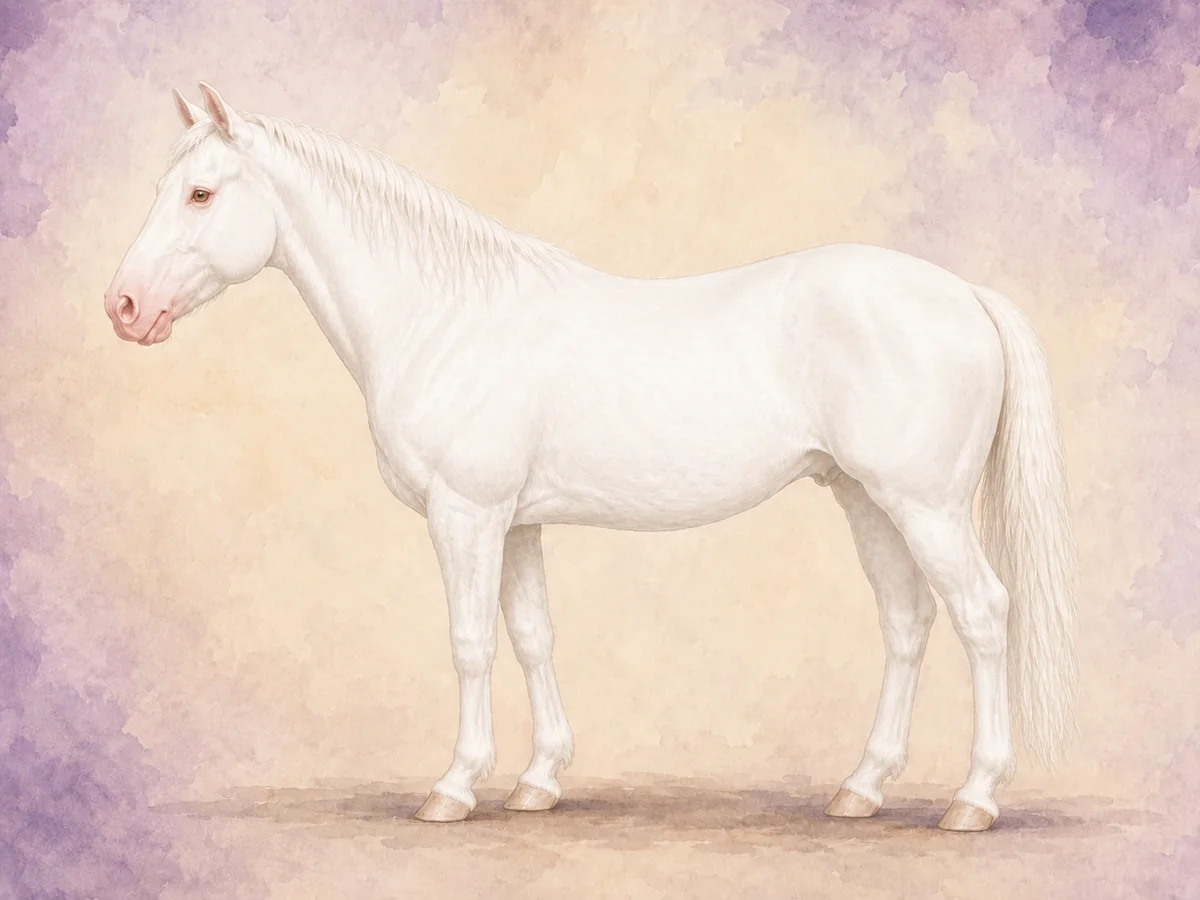
Dominant white
A group of genes giving much to fully white, with pink skin but dark eyes.
Appaloosa patterns
Spotted patterns of the leopard complex, with or without spots.
-
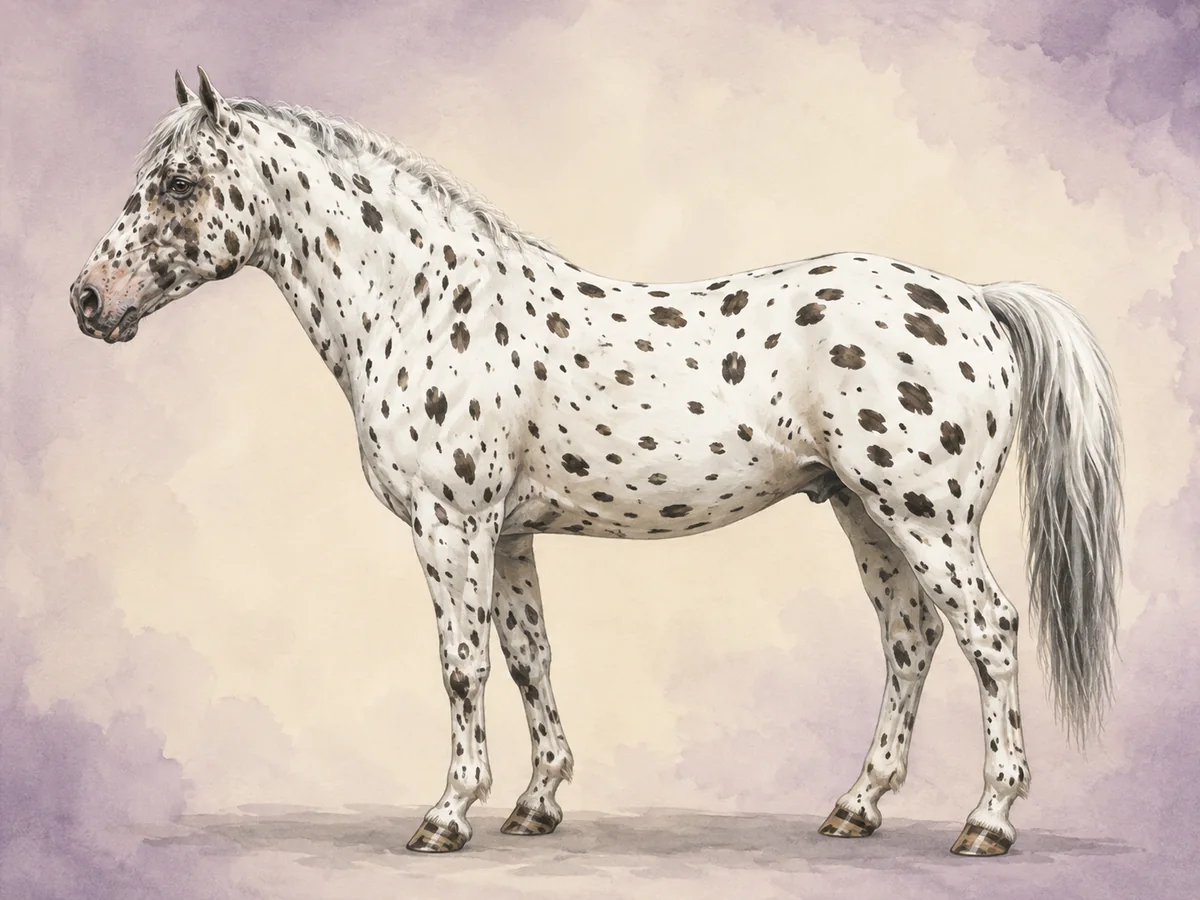
Leopard
A white coat covered with rounded coloured spots, like a leopard.
-
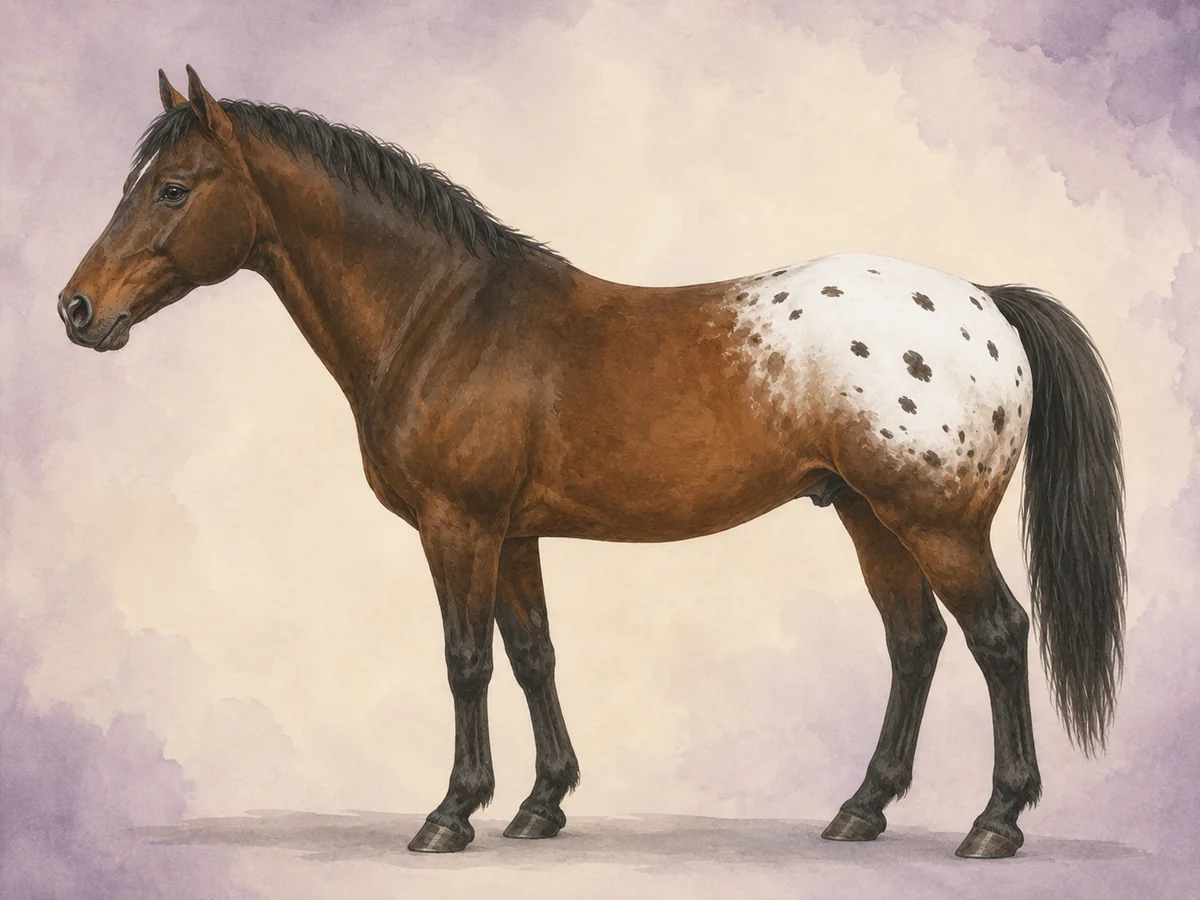
Blanket
A white blanket over the hips and croup, sometimes with spots in it.
-
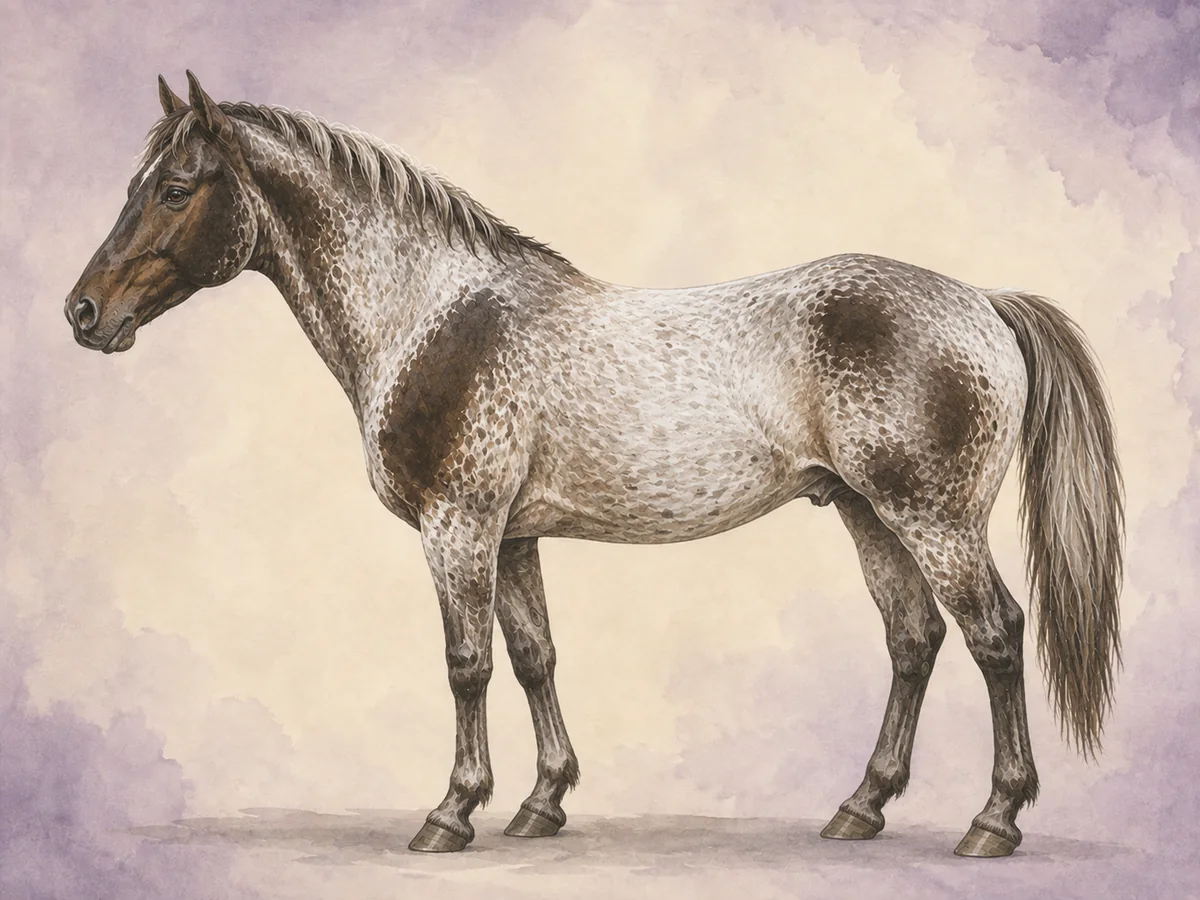
Varnish roan
An appaloosa form of roaning with dark varnish marks on the bony points.
-
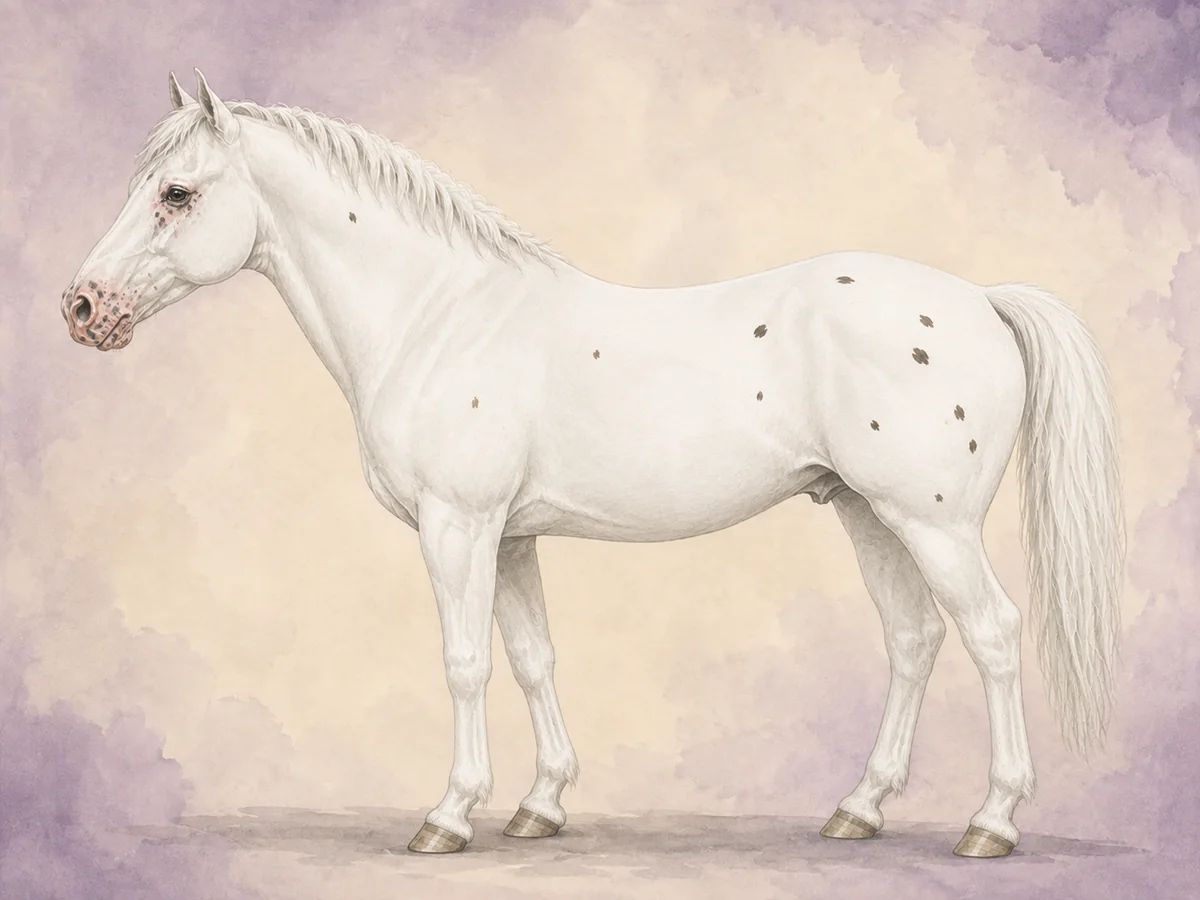
Fewspot leopard
An almost fully white appaloosa horse with only a few spots.
Other modifiers
Special effects such as sooty, pangare, silver or champagne.
-
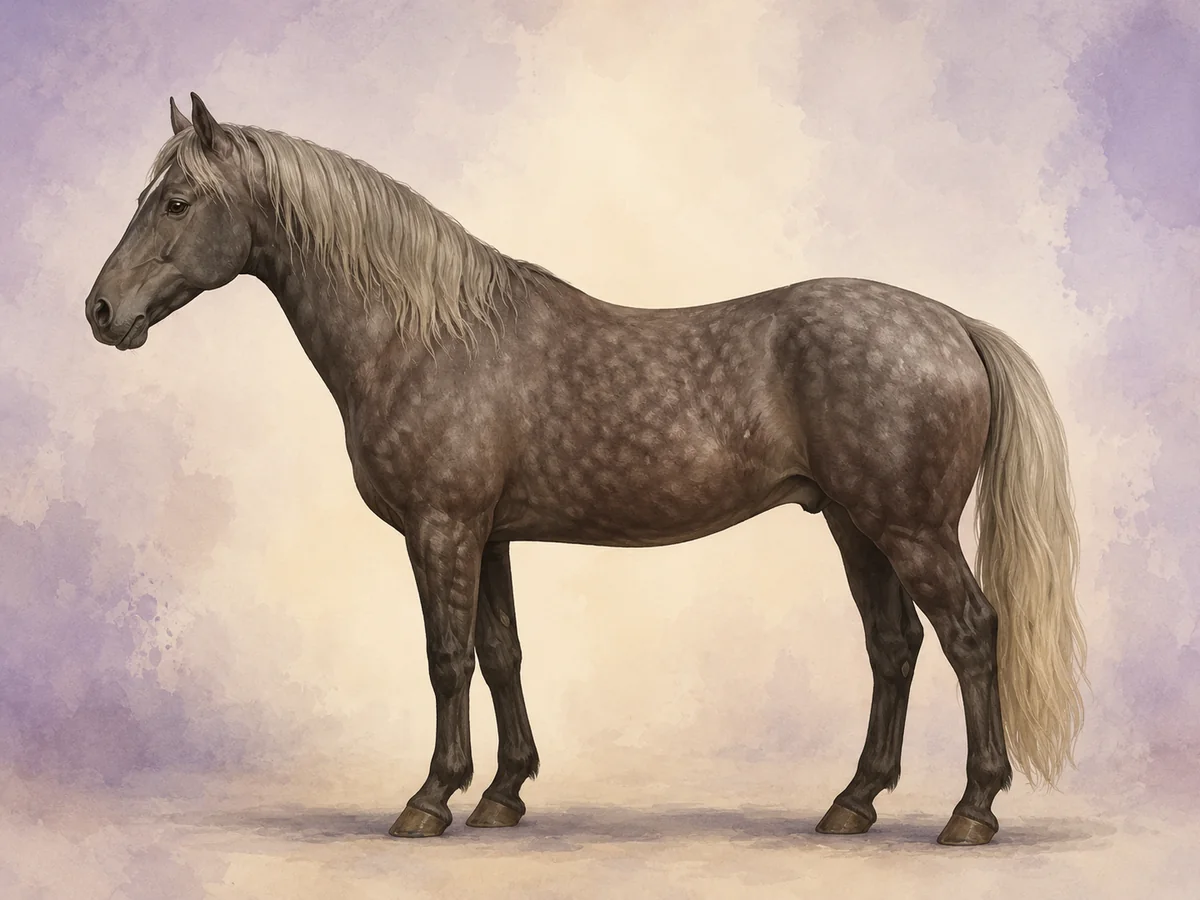
Silver
Silver turns black mane and tail light grey to almost white, often with dapples in the coat.
-
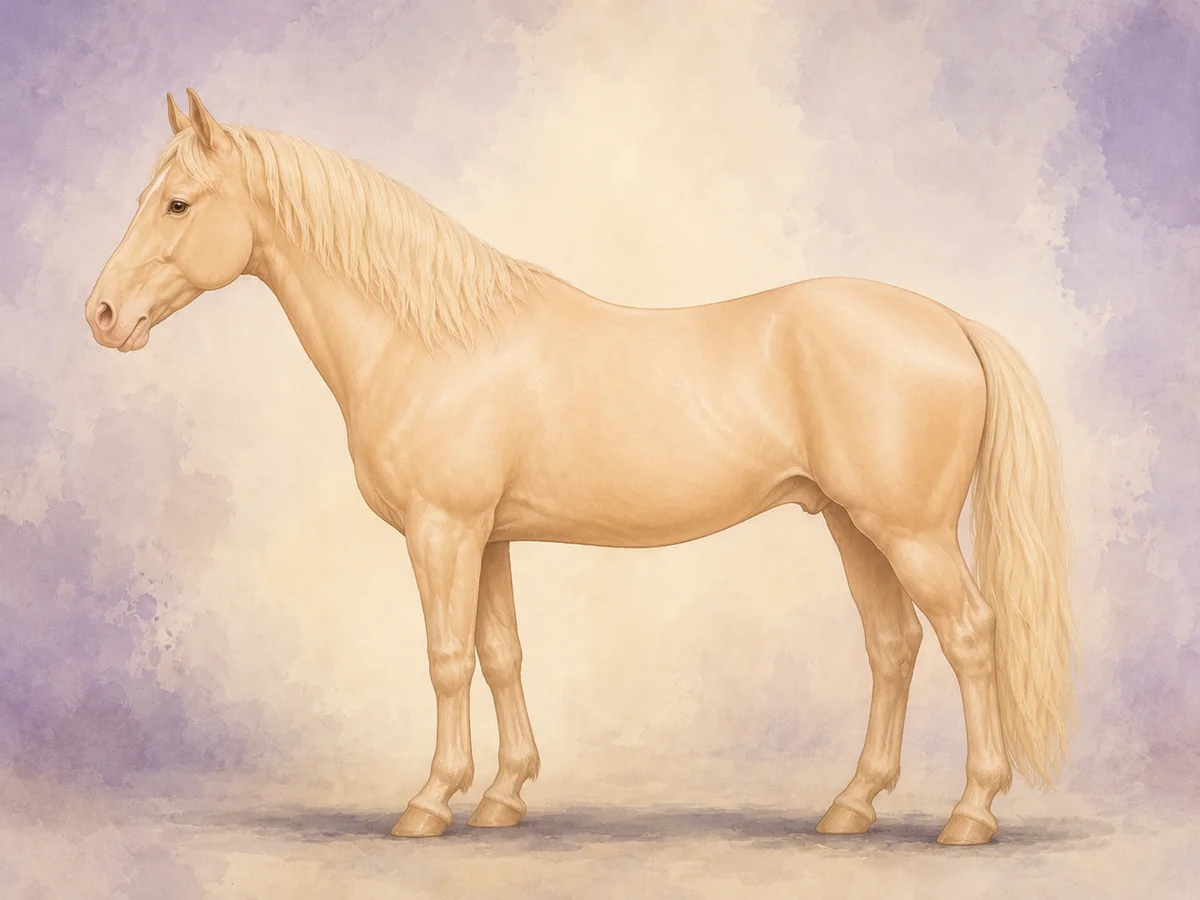
Pearl
A recessive dilution gene that only shows in double dose or together with cream.
-
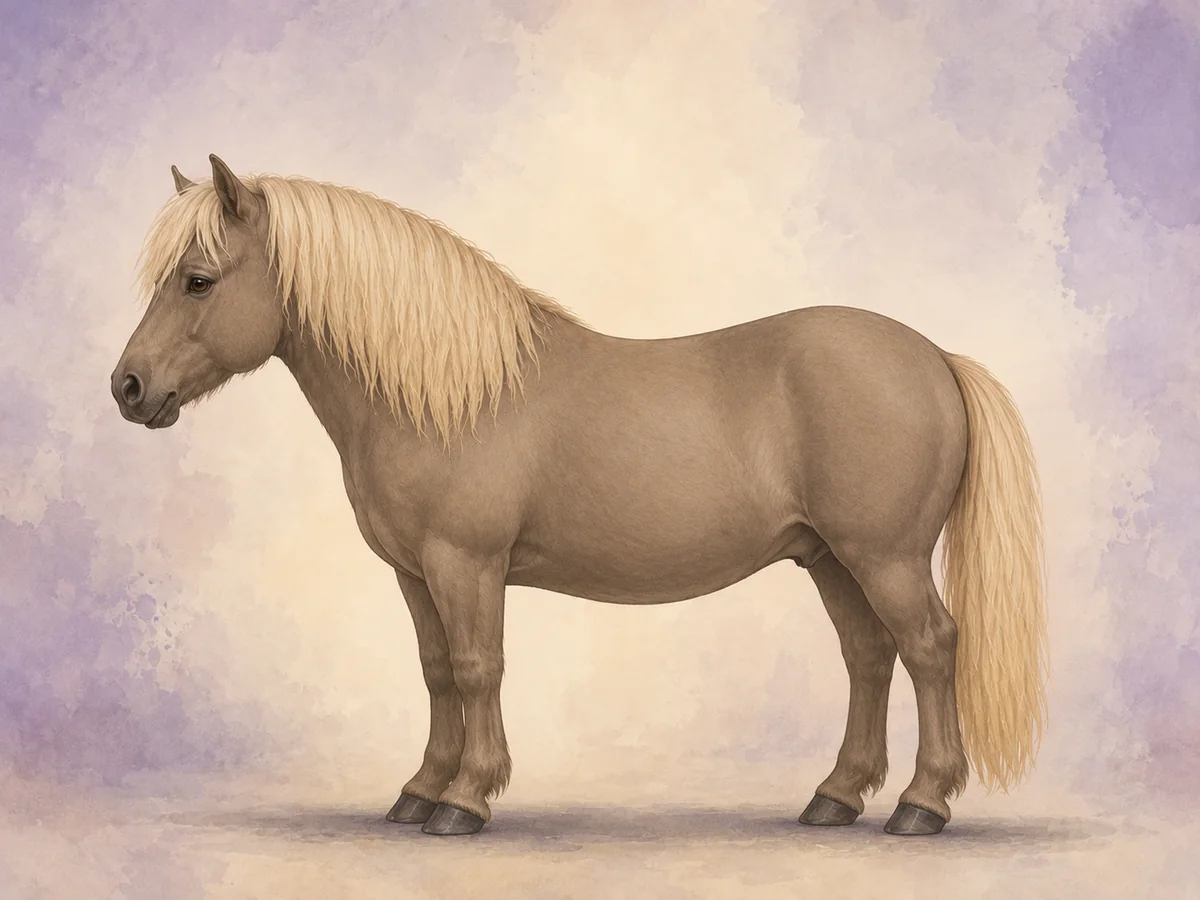
Mushroom
A rare recessive gene that dilutes chestnut to a sepia tone.
-
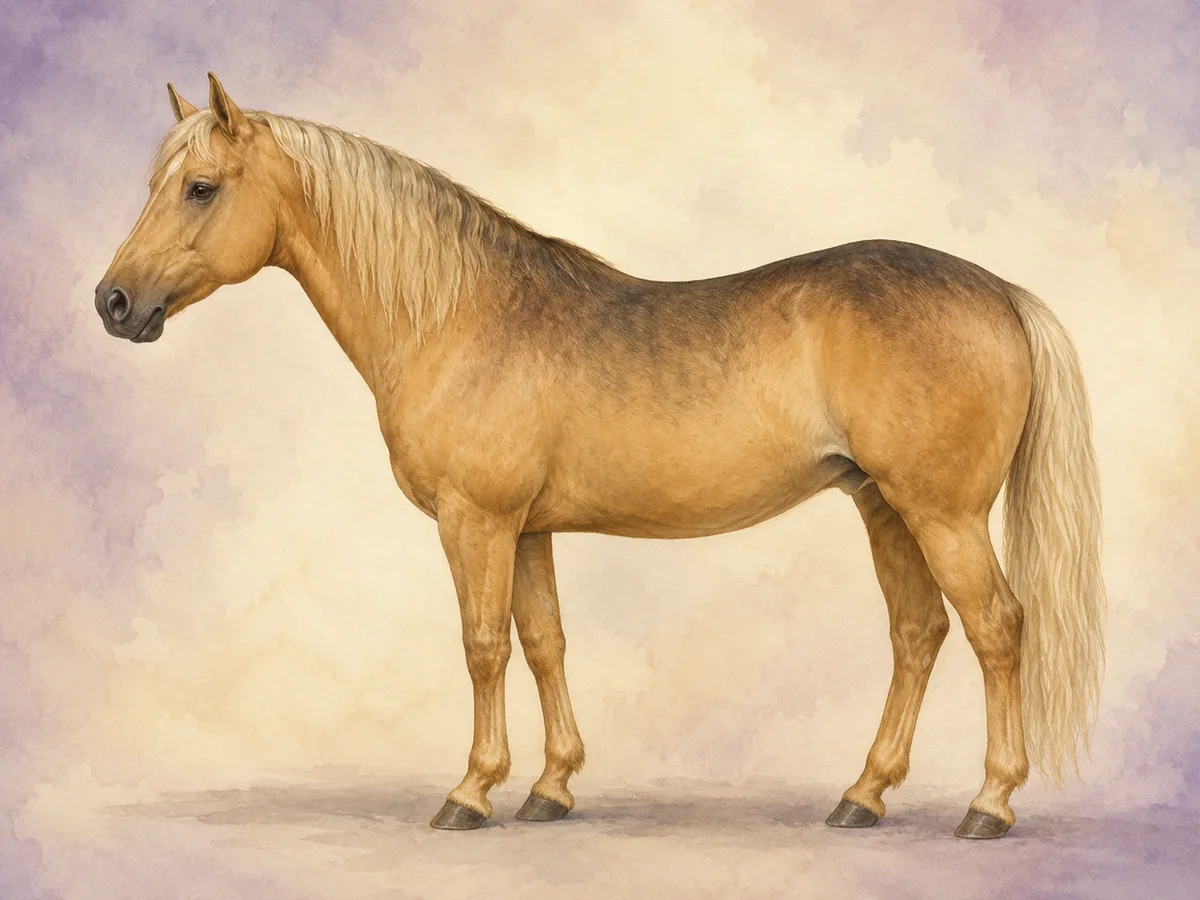
Sooty
Black hairs like soot over the back and shoulders, darker on top.
-
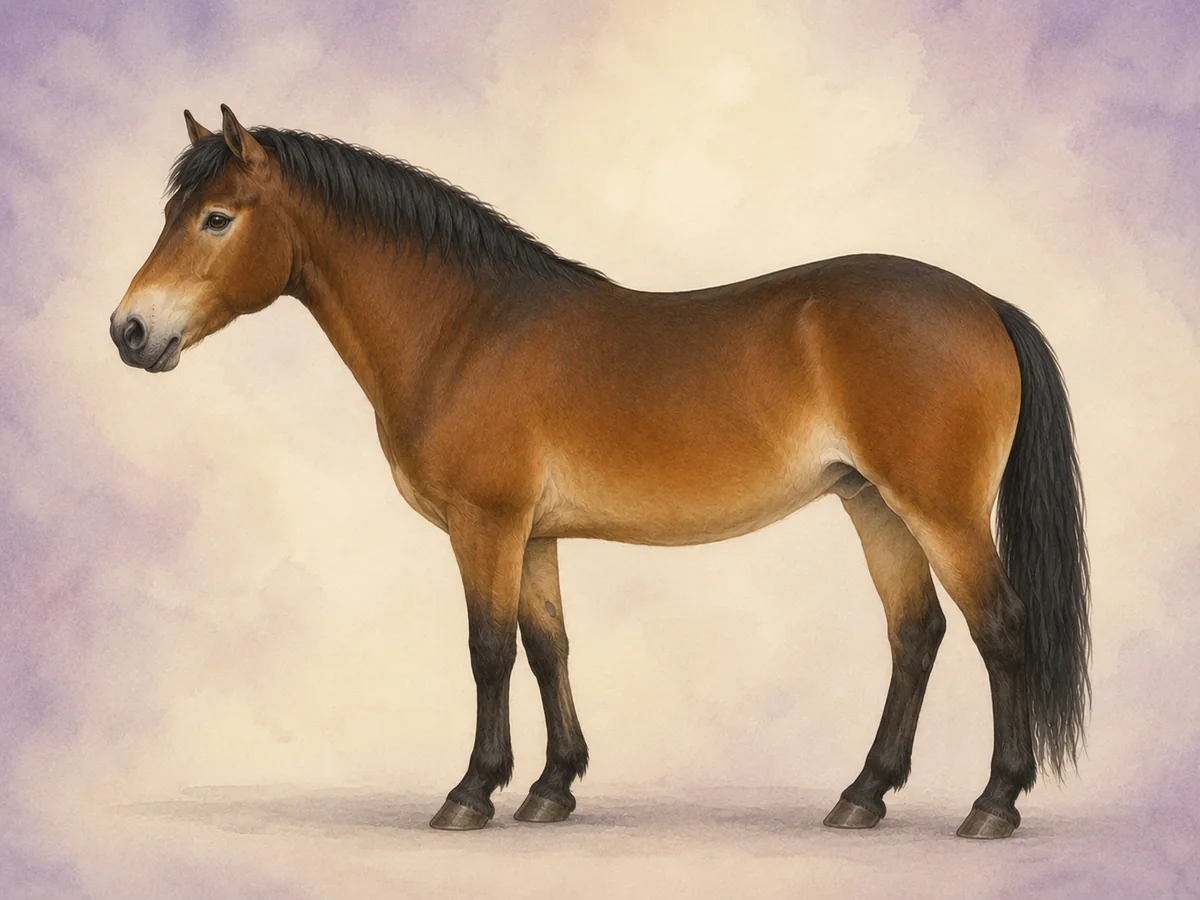
Pangare
Lighter, mealy zones on the muzzle, belly, flanks and behind the elbows.
-
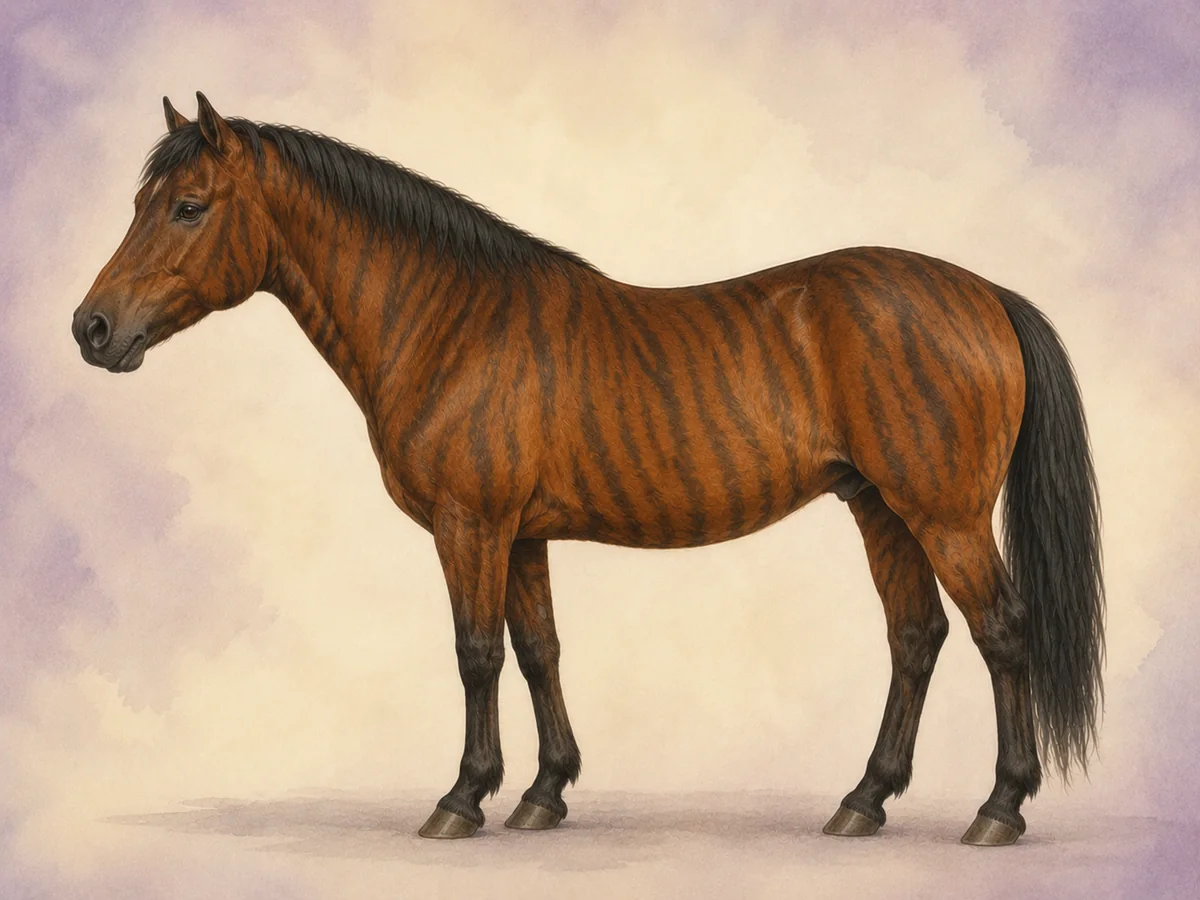
Brindle
Rare vertical stripes or streaks of colour over the body.
-
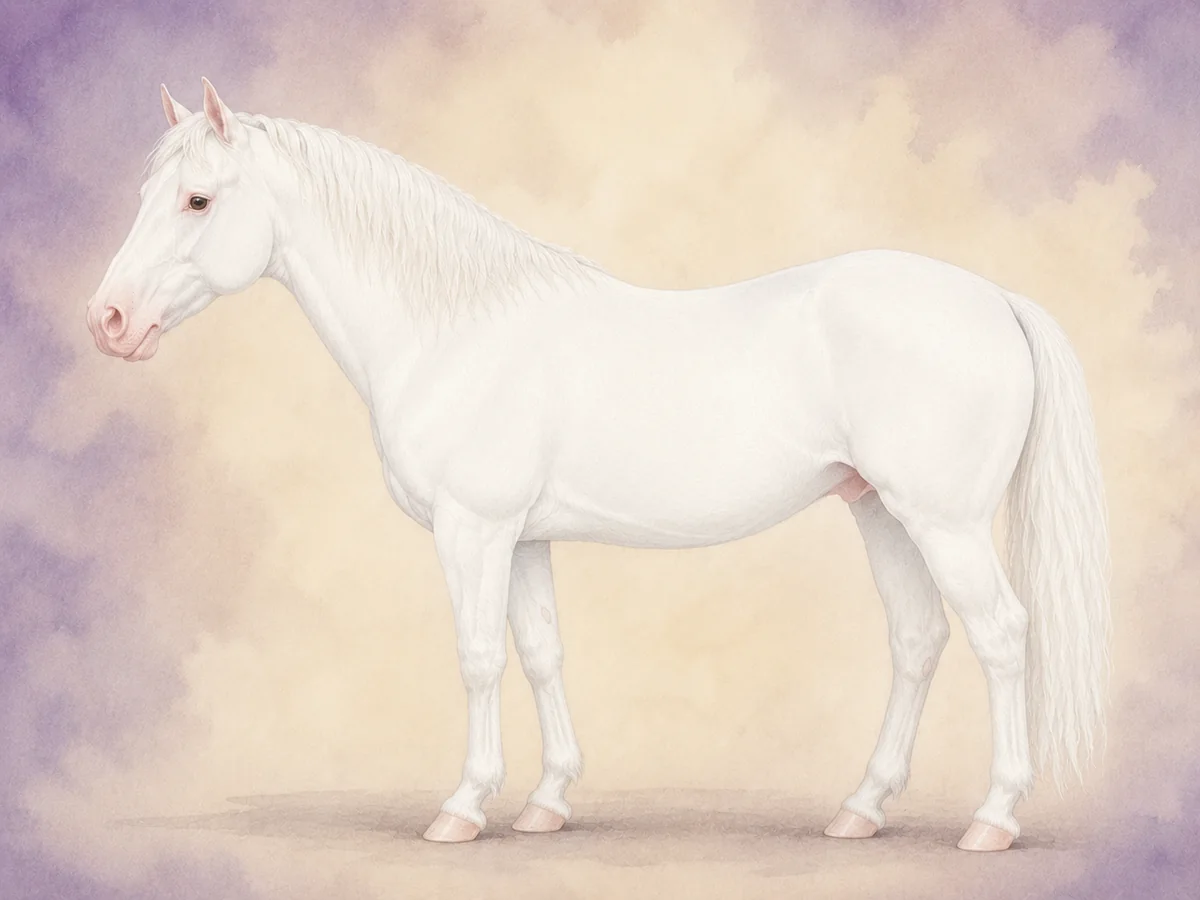
White
A naturally fully white horse with pink skin, born white (unlike grey).