


Salt
Salt provides sodium and chloride, two minerals that roughage and concentrates usually do not supply in sufficient amounts. That is why almost every horse needs access to salt all year round.
General information, not individual feeding or ration advice. For your own horse, consult your vet or a nutritionist.
How does it work?
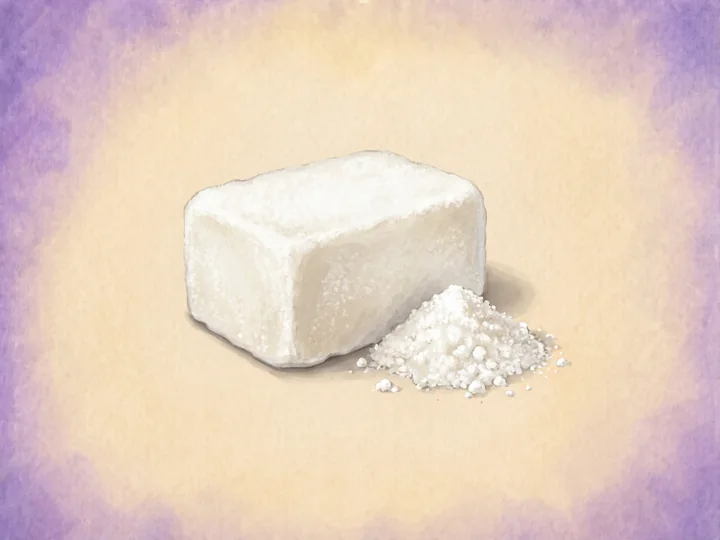
Sodium and chloride are macrominerals that a horse needs every day, but that grass and grains generally do not contain enough of. A 500 kg horse at rest in cool weather needs about 10 grams of sodium per day, which works out at roughly 25 to 30 grams of table salt. Loose salt is often taken up more readily than a lick block. When sweating, the requirement rises sharply, because sweat mainly contains sodium, chloride and potassium.
Why it matters
Without enough salt a horse may drink too little and recover more slowly after exercise. Free access to salt lets the horse adjust its intake to its own needs.
Common misconceptions
- A lick block alone is not always enough; some horses lick too little to meet their needs.
- Salt is not bad for horses, as is sometimes thought; it is in fact a necessary mineral.
What to watch for
Always provide plenty of water alongside salt. In hard work and with heavy sweating the salt requirement rises to several times the maintenance requirement; get advice from a vet or expert when using electrolytes.
Discover more
Sources: Kentucky Equine Research · Penn State Extension.