


Fibre
Fibre is the structural part of plants and the most important nutrient for the horse. The horse does not digest fibre itself, but has it digested by micro-organisms in the large intestine.
General information, not individual feeding or ration advice. For your own horse, consult your vet or a nutritionist.
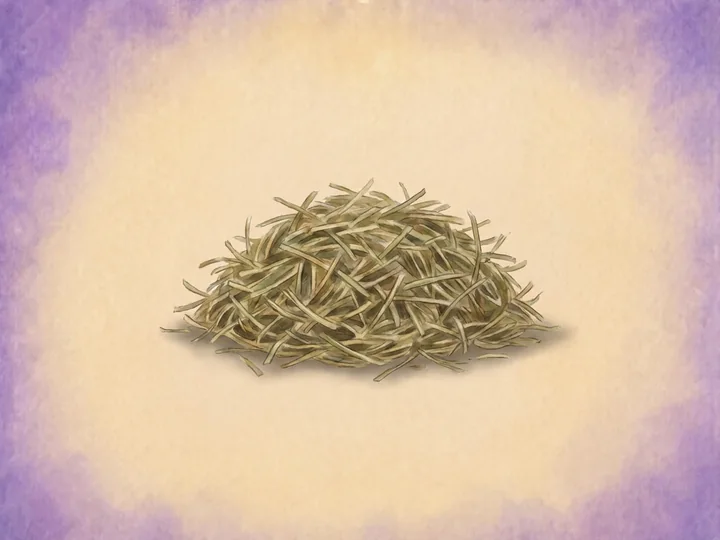
How does it work?
Fibre consists of structural carbohydrates from grass, hay and haylage. The horse has no enzymes of its own for it; instead, the micro-organisms in the caecum and large intestine ferment the fibre. This produces volatile fatty acids, which the horse takes up as its main source of energy from a roughage-based ration. This fermentation is estimated to provide roughly half to two-thirds of the daily energy.
Why it matters
Fibre keeps the gut moving, produces warmth during digestion, and holds water in the large intestine as a kind of reserve. A fibre-rich ration is therefore the core of healthy digestion.
Common misconceptions
- Fibre is not 'empty filler': it is in fact an important source of energy for the horse.
- Energy does not have to come from grains; fibre supplies a large part of the energy through fermentation.
Discover more
Sources: Iowa State University Extension · Rutgers NJAES.