


Licking and chewing
The horse licks its lips and makes chewing movements without food. Often after a tense moment, not simply submission.
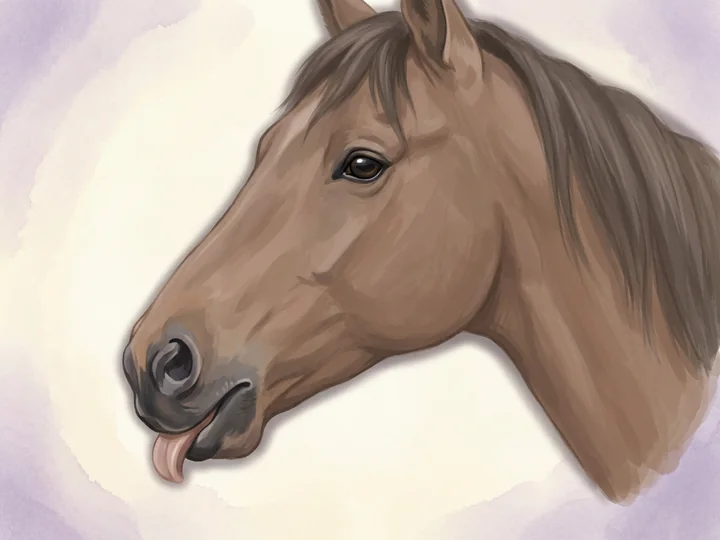
What you see
The horse moves its tongue, licks over its lips and makes chewing movements while there is no food in the mouth.
What it can mean
- Often just after a tense or uncertain situation, as the horse shifts from tension toward more relaxation.
- Possibly the result of a dry mouth from stress becoming moist again on relaxing.
- Sometimes simply a response to taste, dust or saliva.
What this does not prove
Licking and chewing does not prove submission and does not prove the horse has understood an exercise. Field research found it follows a tense moment rather than acting as a submission signal. It is also no proof that the horse has learned something.
Read the combination and the context
Look at what happened just before. If the licking and chewing follows a difficult or tense moment, it mostly tells you about that earlier tension. Read it together with posture and breathing.
Discover more
Sources: Lie, M. & Newberry, R., International Society for Equitation Science · International Society for Equitation Science (ISES). The science here is cautious or not yet clear-cut; provisional.