


Yawning
The horse opens its mouth wide in a slow yawn. The meaning is nuanced: it can belong with relaxation, but also with tension or discomfort.
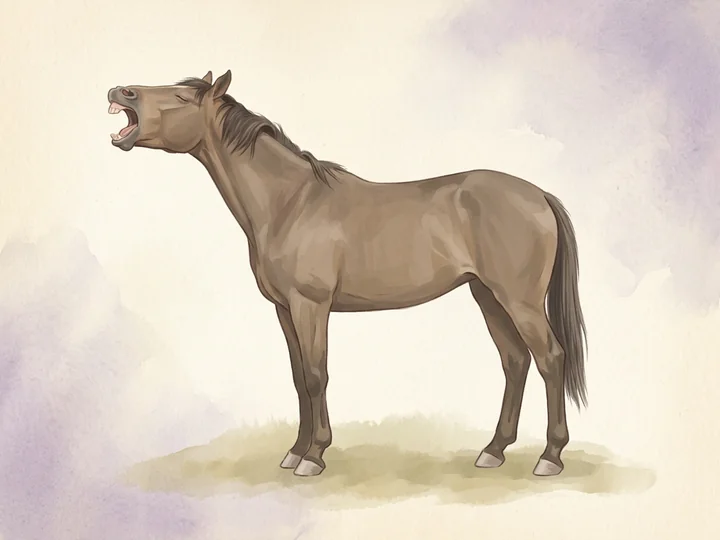
What you see
The horse opens its mouth slowly and wide, often with the jaw slightly to the side, then closes it again. Sometimes a series of yawns in a row.
What it can mean
- Around the shift into rest or after getting up, similar to us.
- Around stress or the release of tension; horses sometimes yawn more in or after tense situations.
- With stomach or other discomfort, repeated yawning can occur, especially with other signs.
What this does not prove
Yawning does not prove a horse is simply tired or content. The meaning depends heavily on context; repeated yawning outside rest can be linked to tension or discomfort.
Read the combination and the context
Note when the yawning happens and how often. A single yawn while drifting off is different from series of yawns around food, saddling or tense situations. Watch for other signs of stomach or mouth discomfort.
When to seek help
Noticeably frequent yawning together with signs of discomfort, reduced appetite or behaviour change should be looked at by a vet.
Discover more
Sources: McDonnell, S. (2003), University of Pennsylvania School of Veterinary Medicine (New Bolton Center) · World Horse Welfare. The science here is cautious or not yet clear-cut; provisional.