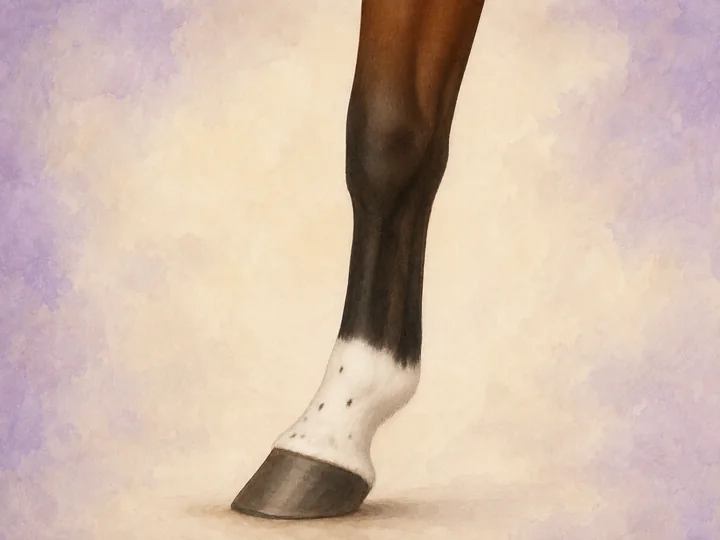


Markings
White markings on the head and legs help identify every horse. Learn how to name a star, stripe, blaze, sock or stocking and how they differ. Each marking first explains what you see.
Head markings
White markings on the head, from a small star to a broad bald face.
-
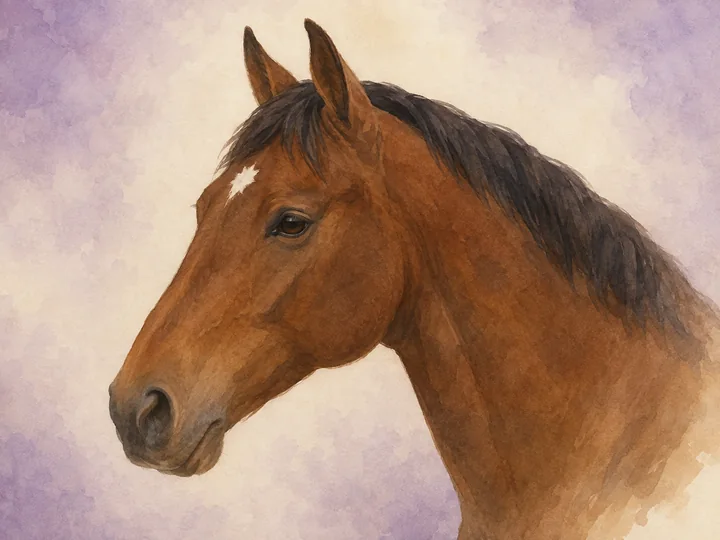
Star
A star is a white mark on the forehead, above the eyes.
-
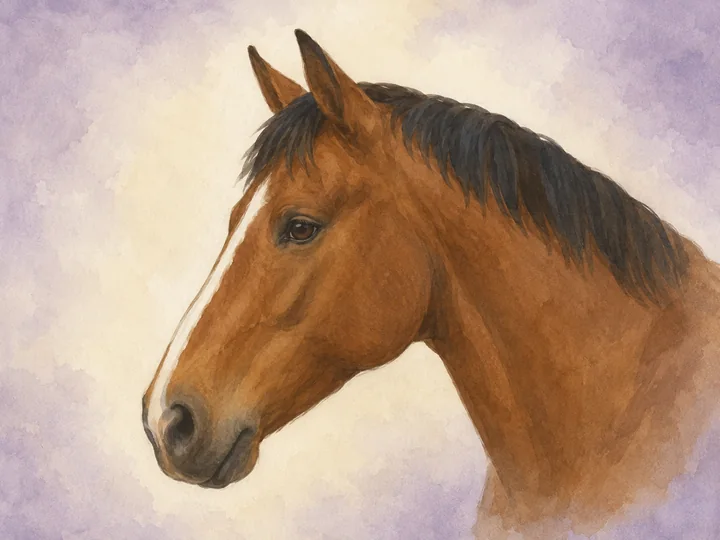
Stripe
A stripe is a narrow white band down the nasal bones, narrower than a blaze.
-
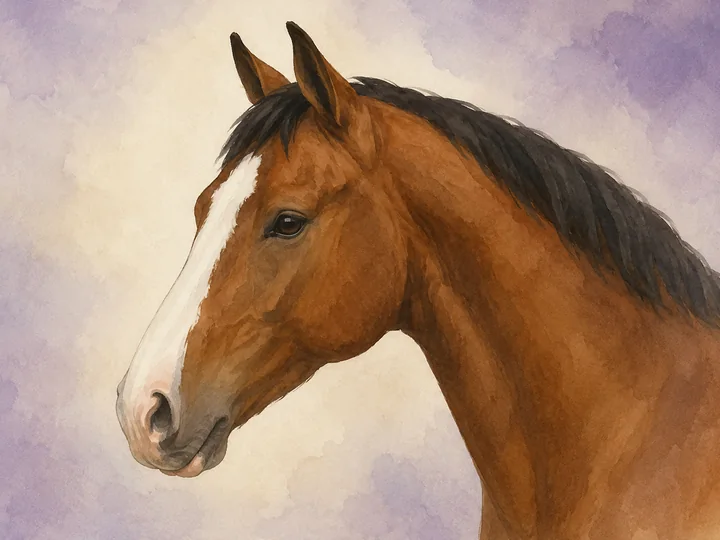
Blaze
A blaze is a wide white band running from the forehead down to the muzzle.
-
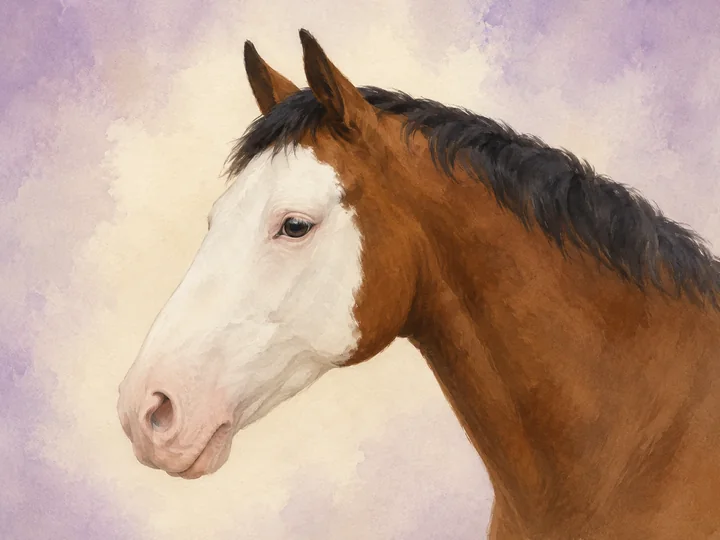
Bald face
A bald face is a very wide blaze that includes at least one eye and often both nostrils.
-
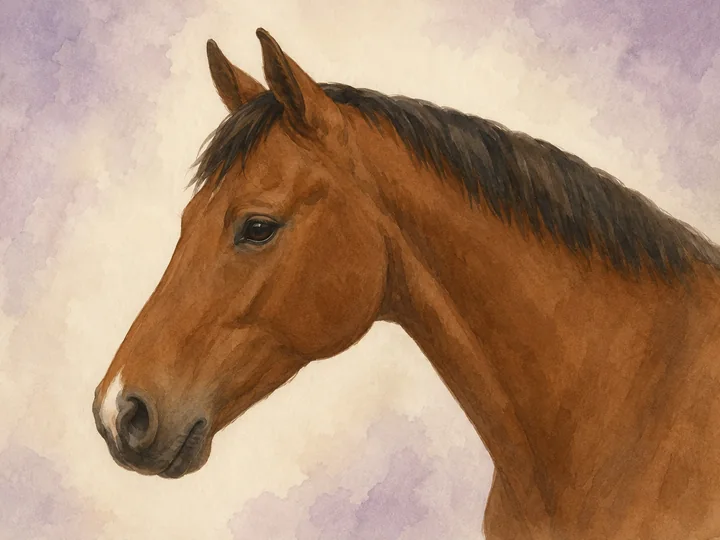
Snip
A snip is a white or flesh-coloured mark between or near the nostrils.
-
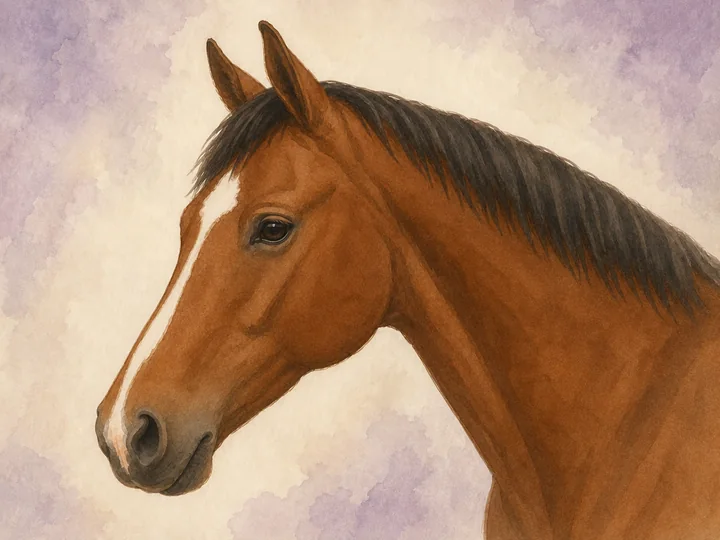
Star and stripe
A star and stripe are connected: a forehead mark running into a narrow band down the muzzle.
-
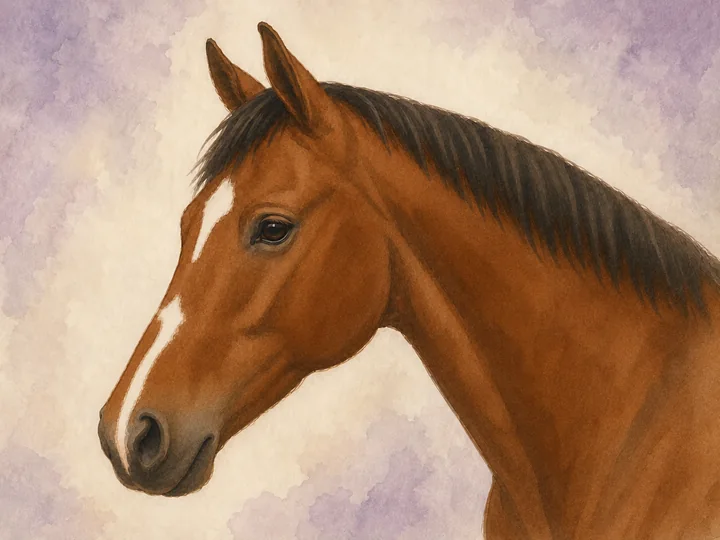
Broken blaze
A broken blaze is a blaze or stripe interrupted at one or more points.
-
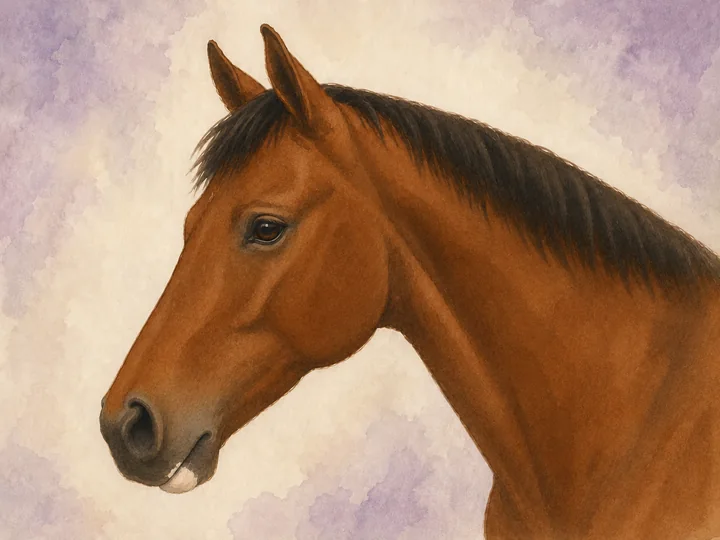
Lip marking
A lip marking is a white or flesh-coloured mark on the upper or lower lip or the chin.
-
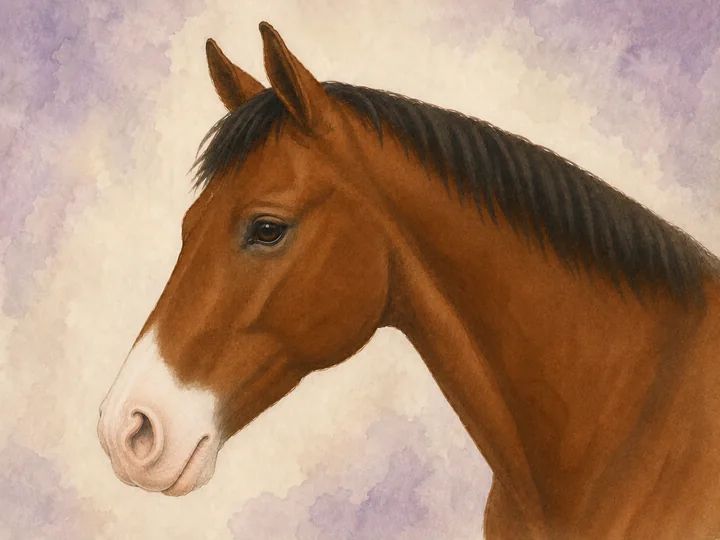
White muzzle
A white muzzle is white covering the whole muzzle and both nostrils.
Leg markings
White on the legs, named by how high the white reaches: from coronet to high white.
-
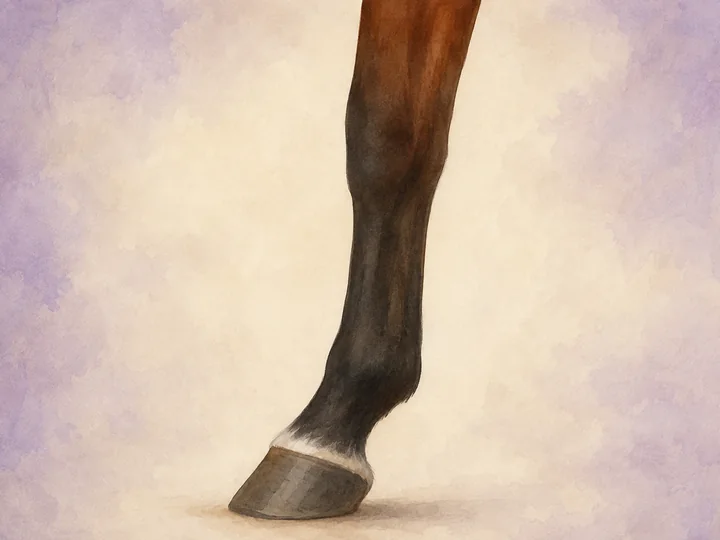
Coronet
A coronet is a narrow white band just above the hoof.
-
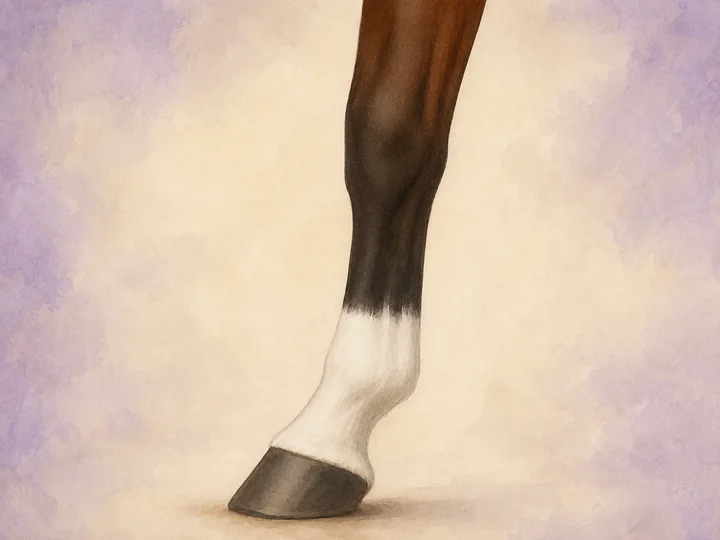
Pastern
A pastern marking is white reaching to the top of the pastern, below the fetlock.
-
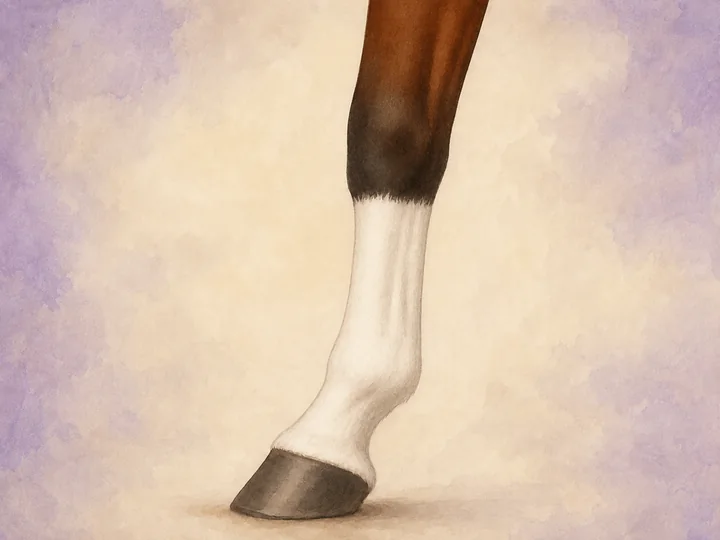
Sock
A sock is white reaching from the hoof to about halfway up the cannon.
-
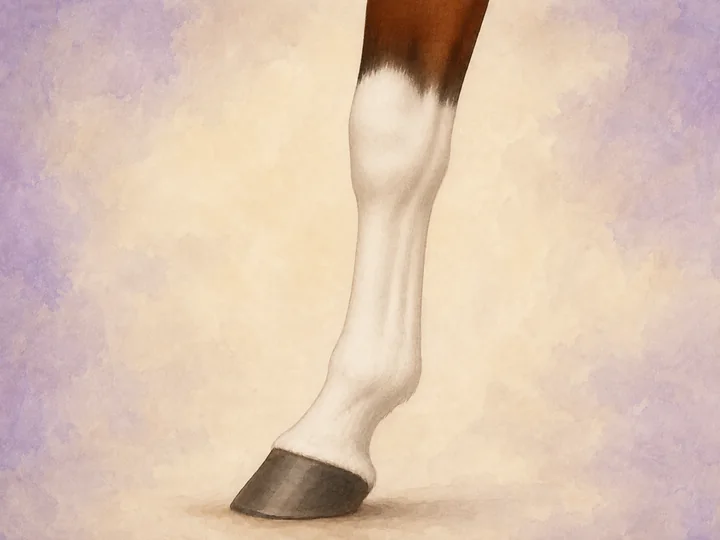
Stocking
A stocking is white reaching up to the knee or hock.
-
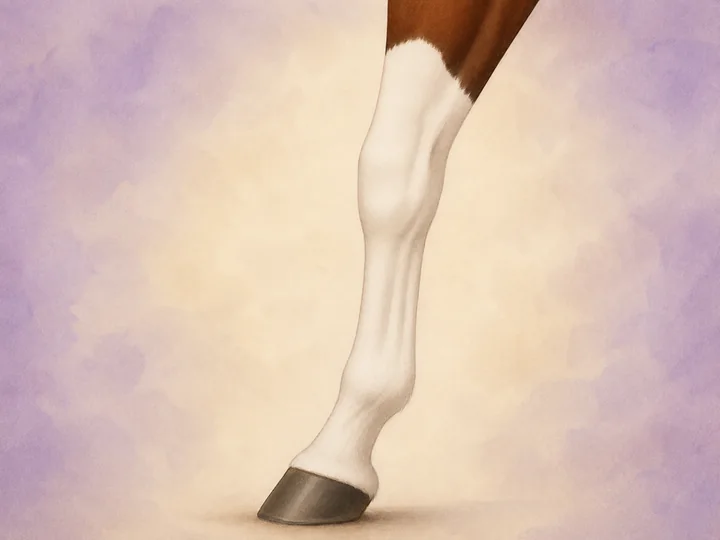
High white
High white is white reaching above the knee or hock.
Special markings
Smaller features that make an otherwise even marking unique.