


Hay
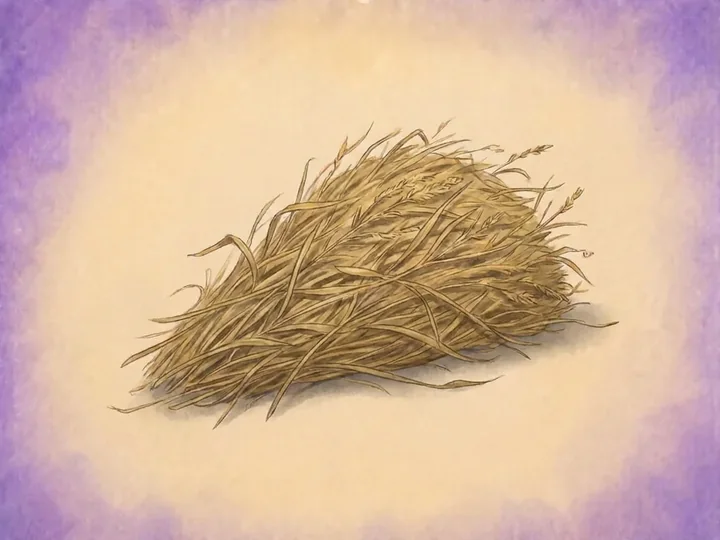
Hay is grass that has been dried so it keeps for a long time. For many horses it is the main source of roughage, especially in winter and when stabled.
General information, not individual feeding or ration advice. For your own horse, consult your vet or a nutritionist.
How does it work?
When hay is made, grass is dried to about 85 percent dry matter or more, so that it does not ferment or go mouldy. The biggest difference from fresh grass is that the water is gone and that some vitamins decline during drying and storage. The nutritional value of hay varies a great deal depending on the type, when it was harvested and how it was stored, and it cannot be judged by eye. A hay analysis in a lab gives you the answer.
Why it matters
Hay lets you provide roughage all year round, even when there is no grass. Because the quality varies so much, good hay largely determines how healthy the basic ration is.
Common misconceptions
- Green, nice-looking hay is not automatically nutritious or suitable; only an analysis shows its true value.
- Hay is not dead, worthless feed: it remains the fibre foundation of the ration.
What to watch for
Hay can contain dust and mould spores that trigger respiratory problems. Soaking or steaming hay reduces the dust considerably; soaking also washes out sugars, but soaking for too long lowers the hygiene and nutritional value. If in doubt about dusty or musty hay: do not feed it.
Discover more
Sources: Penn State Extension · Kentucky Equine Research.