


Roughage
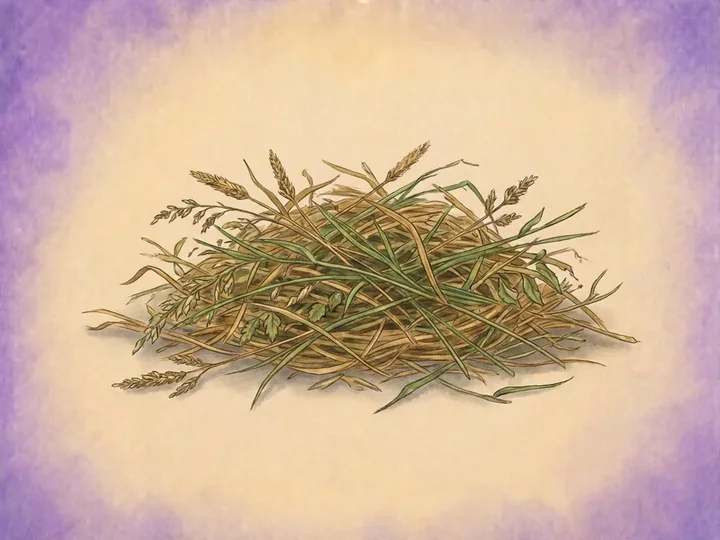
Roughage such as grass, hay and haylage is the foundation of every horse's ration. Horses are grazers that take in small amounts of fibre-rich feed throughout the day.
General information, not individual feeding or ration advice. For your own horse, consult your vet or a nutritionist.
How does it work?
Roughage consists of the fibre-rich parts of plants: grass, hay, haylage and, to a lesser extent, straw. A horse's digestive system is built for an almost constant supply of fibre. As a rule of thumb, a horse eats about 1.5 to 2.5 percent of its bodyweight in dry matter per day. The 1.5 percent figure counts as a lower limit rather than a target; most healthy horses do better closer to 2 percent. For a 500 kg horse that works out at roughly 7.5 to 12.5 kg of dry matter per day.
Why it matters
Roughage keeps the gut busy and healthy. Long periods without feed are linked to gastric ulcers, colic and stable vices. That is why plenty of well-spread roughage matters more than concentrates.
Common misconceptions
- Concentrates are not the basis of the ration. Roughage is, and concentrates are at most a supplement.
- Making horses fast for long stretches between meals is not natural. They are built to eat small amounts almost all day long.
What to watch for
Always change the amount or type of roughage gradually, because sudden changes upset the gut flora. This is general information and not individual ration advice; ask your vet or a nutritionist for a ration tailored to your horse.
Discover more
Sources: Merck Veterinary Manual · CAFRE · Iowa State University Extension.