


Biting
From nipping and nibbling to a real bite. The meaning ranges from play and mutual grooming to defence, fear or pain.
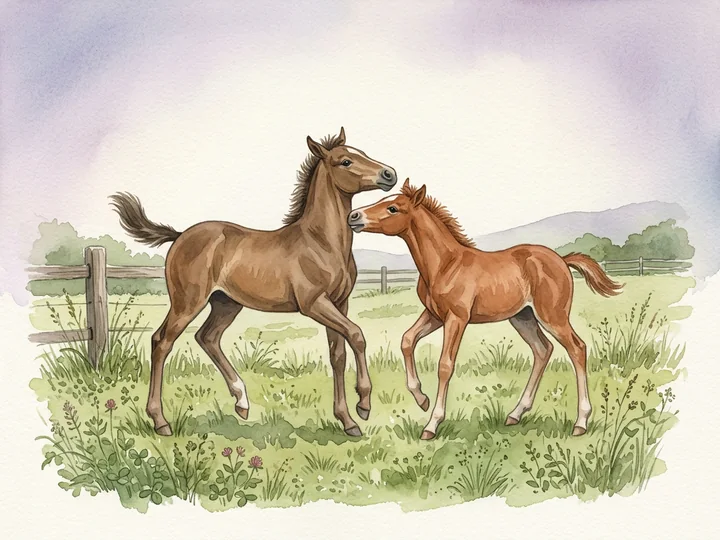
What you see
The horse directs its teeth at something or someone, from gentle nibbling and nipping to a targeted bite with pinned ears.
What it can mean
- Mutual grooming and play, especially in young horses, with gentle nibbling.
- Defence or a threat toward another horse or a person.
- A response to pain or discomfort, for example biting at the flank or at the girth when being girthed up.
- Learned behaviour around food or space.
What this does not prove
Biting does not prove malice. With people it often comes from fear, frustration, pain or clumsy handling, and in young horses often from play that gets too rough.
Read the combination and the context
Note the trigger and the ears. Biting at its own flank or at the girth when girthing up can point to stomach or belly discomfort. Playful nibbling between horses is different from a targeted bite with pinned ears.
When to seek help
Sudden or increasing biting, especially at its own belly or when being girthed, should be investigated for stomach or belly pain. For biting toward people, guidance from a trainer or behaviour specialist is advised.
Discover more
Sources: McDonnell, S. (2003), University of Pennsylvania School of Veterinary Medicine (New Bolton Center) · International Society for Equitation Science (ISES) · World Horse Welfare.