


Kick threat
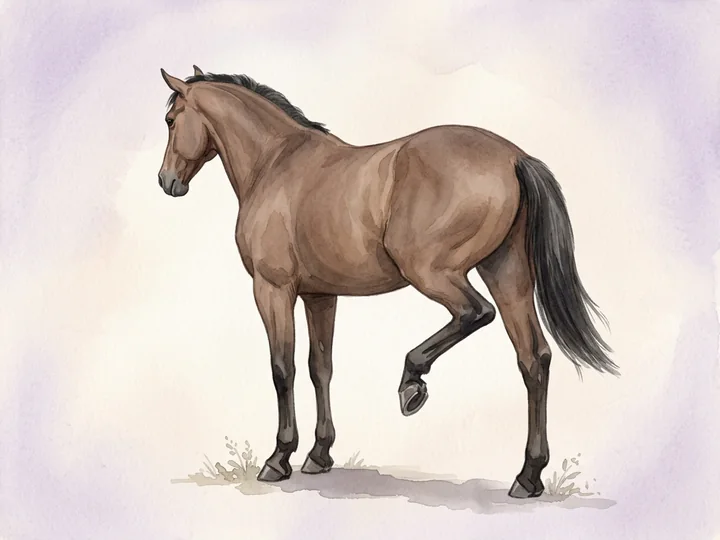
A raised or cocked hind leg as a warning. Usually defence or creating distance.
What you see
The horse lifts a hind leg, stamps or cocks the leg backward without contact, often with pinned ears and the hindquarters turned toward the target.
What it can mean
- Creating distance from another horse or from something in the rear zone.
- Defence with discomfort, for example with flies, touching a sensitive spot or pain.
- Startle at an unexpected touch from behind.
What this does not prove
A kick threat does not prove a mean character. It is usually a warning asking for space. Kicking toward the belly or when touched can be a response to pain.
Read the combination and the context
See whether the horse is reacting to something behind it, to another horse or to touch of a particular spot. Repeated threatening toward its own belly can belong with belly pain.
When to seek help
New or repeated kick threats when touched, groomed or girthed should be investigated for pain. For safety, work with an experienced handler.
Discover more
Sources: McDonnell, S. (2003), University of Pennsylvania School of Veterinary Medicine (New Bolton Center) · World Horse Welfare.