


Freezing
The horse stiffens and stands motionless. This is not always calm; it can be high tension or helplessness.
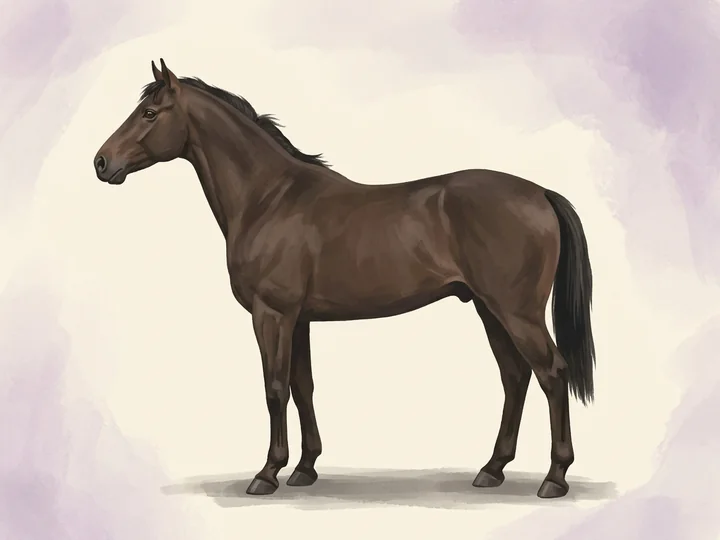
What you see
The horse stands strikingly still and stiff, with tense muscles and sometimes held breath, while ears and eyes are strongly fixed on something.
What it can mean
- A brief freeze while the horse judges whether something is dangerous, often just before fleeing or relaxing.
- High tension or fear where the animal cannot flee and freezes.
- Learned helplessness or dullness under prolonged stress, which can look calm from the outside.
What this does not prove
Standing motionless does not prove calm or obedience. A frozen, tense horse may in fact be highly stressed. Do not confuse it with real relaxation.
Read the combination and the context
Distinguish a loose, soft horse standing still from a stiff, tense animal that does not respond and keeps a close watch on its surroundings. Look at muscle tension, breathing and the eye area.
When to seek help
A horse that often freezes, turns away or stops responding under pressure should be looked at with a behaviour specialist, with attention to possible pain and stress.
Discover more
Sources: McGreevy, P. (2012), Saunders/Elsevier · International Society for Equitation Science (ISES) · World Horse Welfare. The science here is cautious or not yet clear-cut; provisional.