


Threat display
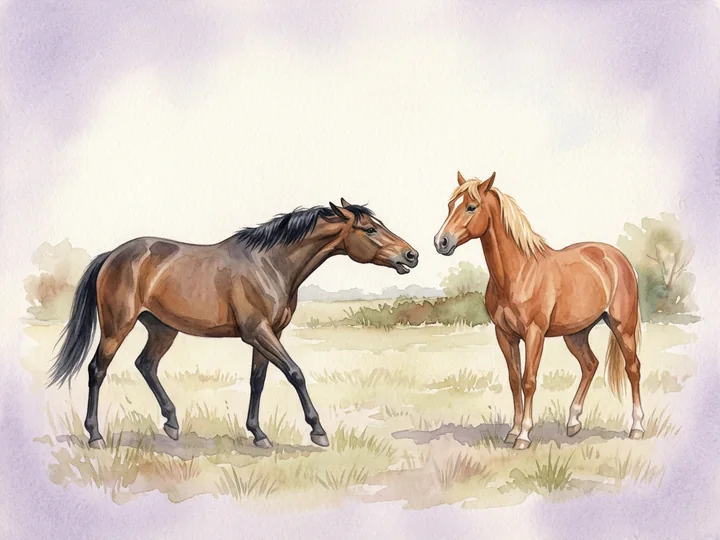
A warning without contact: pinned ears, a stretched neck or a threatening gesture. Meant to create distance.
What you see
The horse pins its ears, stretches or swings its neck, may bare its teeth or lift a leg, without actually biting or kicking.
What it can mean
- Defending space or food from another horse.
- Confirming rank within the herd without a real fight.
- Aversion or discomfort toward people or situations, for example with pain around saddling.
What this does not prove
A threat does not prove a bad character. Threatening is normal communication that actually avoids contact. Threatening toward people often points to past experiences, fear or pain.
Read the combination and the context
See what the horse is defending or avoiding. Threatening during handling, grooming or saddling calls for a check for pain. Note whether it stays at a threat or turns into biting or kicking.
When to seek help
New or increasing threat behaviour when touched, groomed, saddled or ridden should be investigated for pain, alongside guidance from a behaviour specialist or trainer.
Discover more
Sources: McDonnell, S. (2003), University of Pennsylvania School of Veterinary Medicine (New Bolton Center) · International Society for Equitation Science (ISES).