


Flight response
Jumping away, shying sideways or bolting. The horse is by nature a flight animal and reacts to what it perceives as a threat.
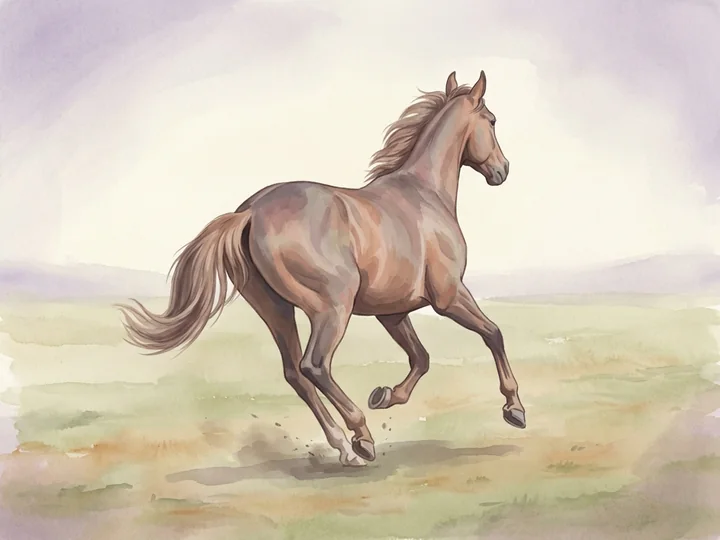
What you see
The horse jumps sideways, backs off, spins away or runs off, often suddenly and with a high head, tense body and flared nostrils.
What it can mean
- Startle at something unexpected: a sound, a movement or an unfamiliar object.
- Fear or uncertainty in a new or busy environment.
- Transfer of tension from the herd: when one horse flees, others often follow.
What this does not prove
Fleeing does not prove unwillingness or disobedience. It is a deep-rooted survival response of a prey animal; the horse does not think first but reacts.
Read the combination and the context
Look at the trigger and whether the horse settles again afterward. Persistently quick shying and difficulty calming down can point to stress, pain, poor eyesight or too many stimuli.
When to seek help
A horse that shies noticeably more often or more strongly than it used to should be checked for pain, eyesight and welfare, alongside calm training with a good instructor.
Discover more
Sources: McGreevy, P. (2012), Saunders/Elsevier · International Society for Equitation Science (ISES).